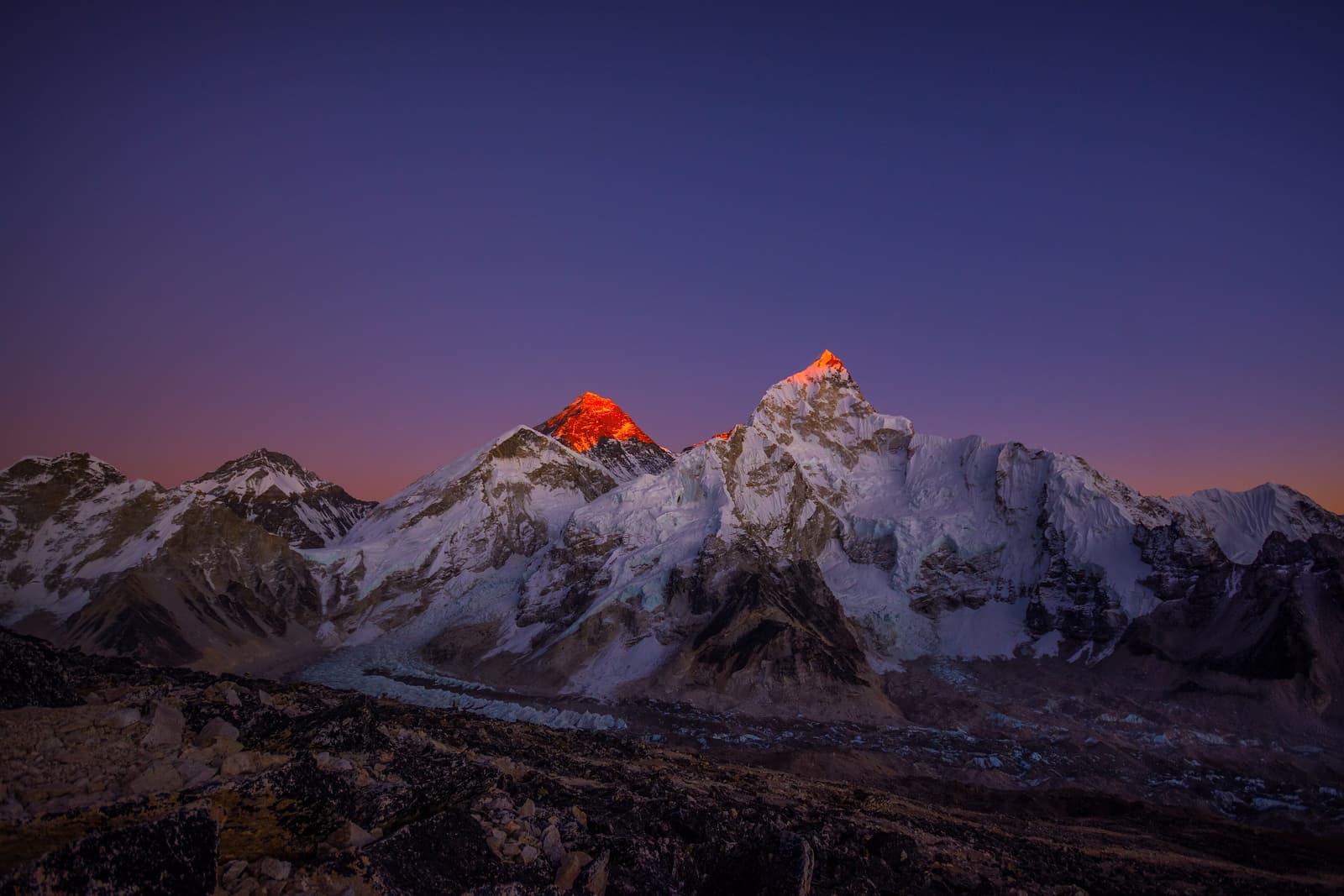
The Khumbu’s year is ruled by the monsoon. From June to early September moist air from the Bay of Bengal brings cloud and rain; from October the skies clear and stay largely clear, if cold, until the following spring. That gives two main seasons — autumn (late September to November) and spring (March to May) — with a cold, bright winter and a green, cloudy summer between them.
Month by month
| Months | Weather | Crowds | Highlights | Watch out for |
|---|---|---|---|---|
| March – April | Mild days, cold nights; hazier in the afternoons | Busy | Rhododendrons in the lower park; expeditions arriving | Late snow on the passes |
| May | Warmest month; cloud builds before the monsoon | Busy early, quieter later | Everest summit season; flowers higher up; Thame Mani Rimdu | Afternoon showers; haze |
| June – early September | Monsoon: rain, cloud, mild temperatures | Very quiet | Wildflowers, green valleys, Dumje festival | Flight cancellations, leeches low down, hidden views |
| Late September – October | Clearing skies, stable, cool | Busiest of the year | The sharpest mountain views | Full lodges and flights |
| November | Clear, dry, colder | Busy, then easing | Tengboche Mani Rimdu (some years late October) | Hard frosts above 4,000 m |
| December – February | Very cold, mostly clear; occasional heavy snow | Quiet | Empty trails, crystal air, Losar | Closed passes, shut lodges high up |
Autumn: late September to November
After the monsoon the air is washed clean and the views are at their best. Days at Namche are pleasantly cool, nights drop below freezing above about 4,000 m, and the weather is the most stable of the year. October is the single busiest month: lodges, trails and Lukla flights are all full, so book ahead. By mid-November numbers thin and the light turns golden — many old hands consider it the finest time of all, if you have a warm sleeping bag.
Autumn is also festival season. Mani Rimdu at Tengboche usually falls in late October or November.
Spring: March to May
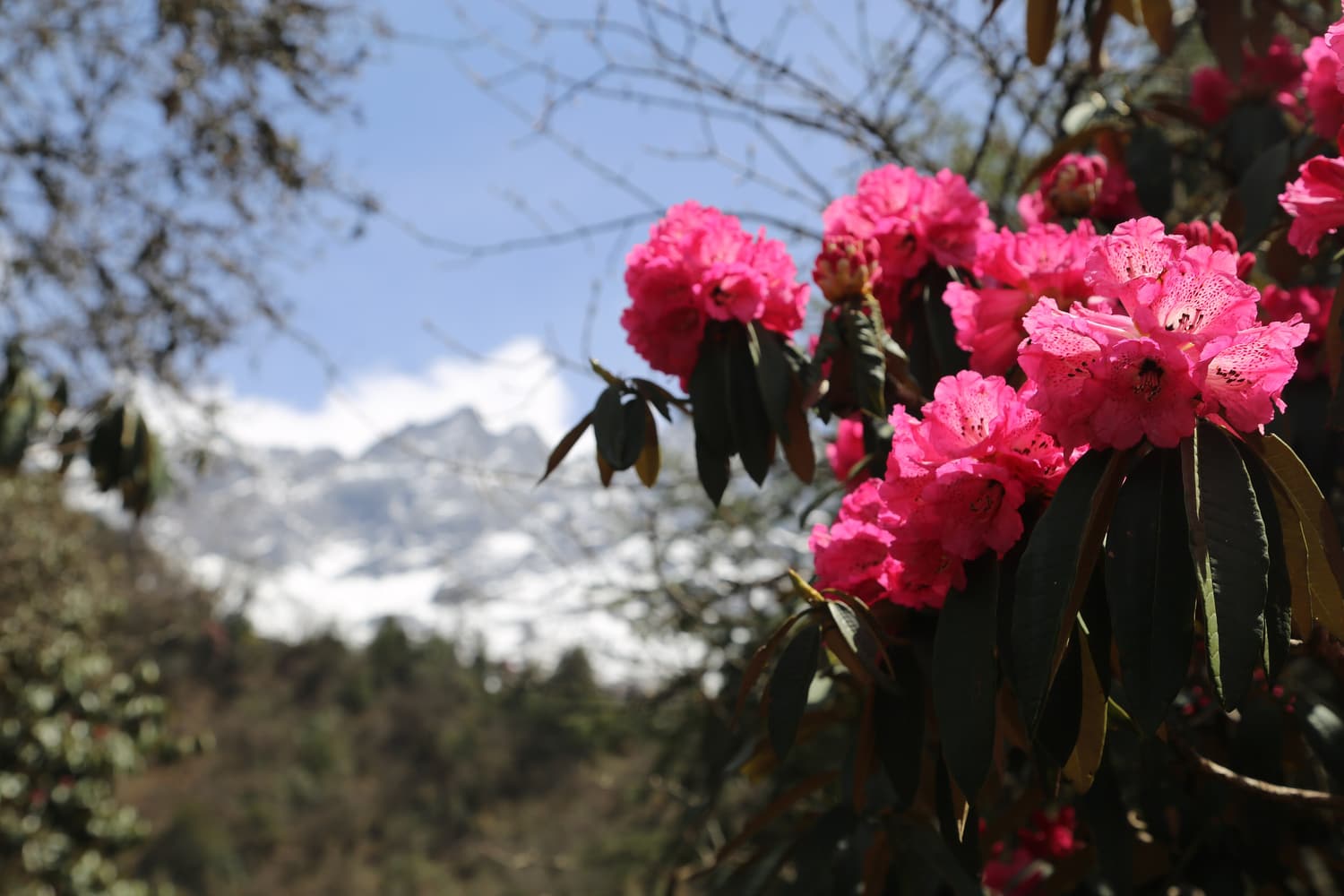
Spring is warmer and softer. The rhododendron forests between Phakding and Tengboche flower from late March into May, birds are nesting, and from April the expedition teams bound for Everest and Lhotse pass up the valley — Base Camp is a tent city by late April and most summits come in the second half of May. Skies are a little hazier than in autumn and cloud tends to build in the afternoon, so start walking early. Late winter snow can linger on the Three Passes into April.
Winter: December to February
Winter days are often brilliantly clear, and you may have a famous viewpoint to yourself. The price is cold: −10 °C at night in Namche is normal and −20 °C or lower at Gokyo or Gorak Shep. Some lodges above 4,000 m close, water pipes freeze, and the high passes are frequently blocked by snow. The lower park — Namche, Khumjung, Thame, Tengboche — is perfectly feasible and very beautiful for well-equipped walkers.
Monsoon: June to early September
The Khumbu lies partly in the rain shadow and receives less rain than the hills further south, but summer is still cloudy and wet, with the peaks hidden for days at a time. Lukla flights are often cancelled, trails are muddy and there are leeches in the forests below Namche. In return the valleys are intensely green, alpine flowers are at their peak, lodges are empty and village life goes on unobserved — this is when Dumje is celebrated. For botanists, photographers of clouds and people who dislike crowds, it has real appeal; build in plenty of spare days.
Typical temperatures
- Namche Bazaar (3,440 m): daytime highs around 10–16 °C in spring and autumn, nights around −5 to 3 °C; in January, highs near 5–7 °C and nights around −8 °C or colder.
- Gokyo or Gorak Shep (about 4,800–5,150 m): daytime around 0–8 °C in the main seasons, nights −10 to −15 °C; much colder in winter.
- Wind chill on ridges and passes can make it feel far colder than the thermometer suggests.
These are indicative figures only; mountain weather varies greatly from year to year.
Festival calendar
- February / early March: Losar, the Sherpa and Tibetan New Year.
- May: Mani Rimdu at Thame; Saga Dawa (May or June).
- 29 May: Everest Day, marking the first ascent in 1953, with events in Namche and Kathmandu and a marathon from Base Camp.
- June / early July: Dumje in the villages.
- August: Janai Purnima pilgrimage to the Gokyo Lakes.
- Late October / November: Mani Rimdu at Tengboche.
All of these except Everest Day follow lunar calendars, so the dates shift each year.
Which season for which trip?
- Short Everest-view treks and village visits: possible all year; best October–November and March–May.
- Gokyo and Base Camp: October–November and late March–May; December is fine for the hardy.
- Three Passes: October–November or late April–May, when the passes are most likely to be free of deep snow.
- Flowers and birds: April–May for rhododendrons, June–August for alpine flowers.
- Mountain flights and helicopter tours: October–April mornings give the clearest air.