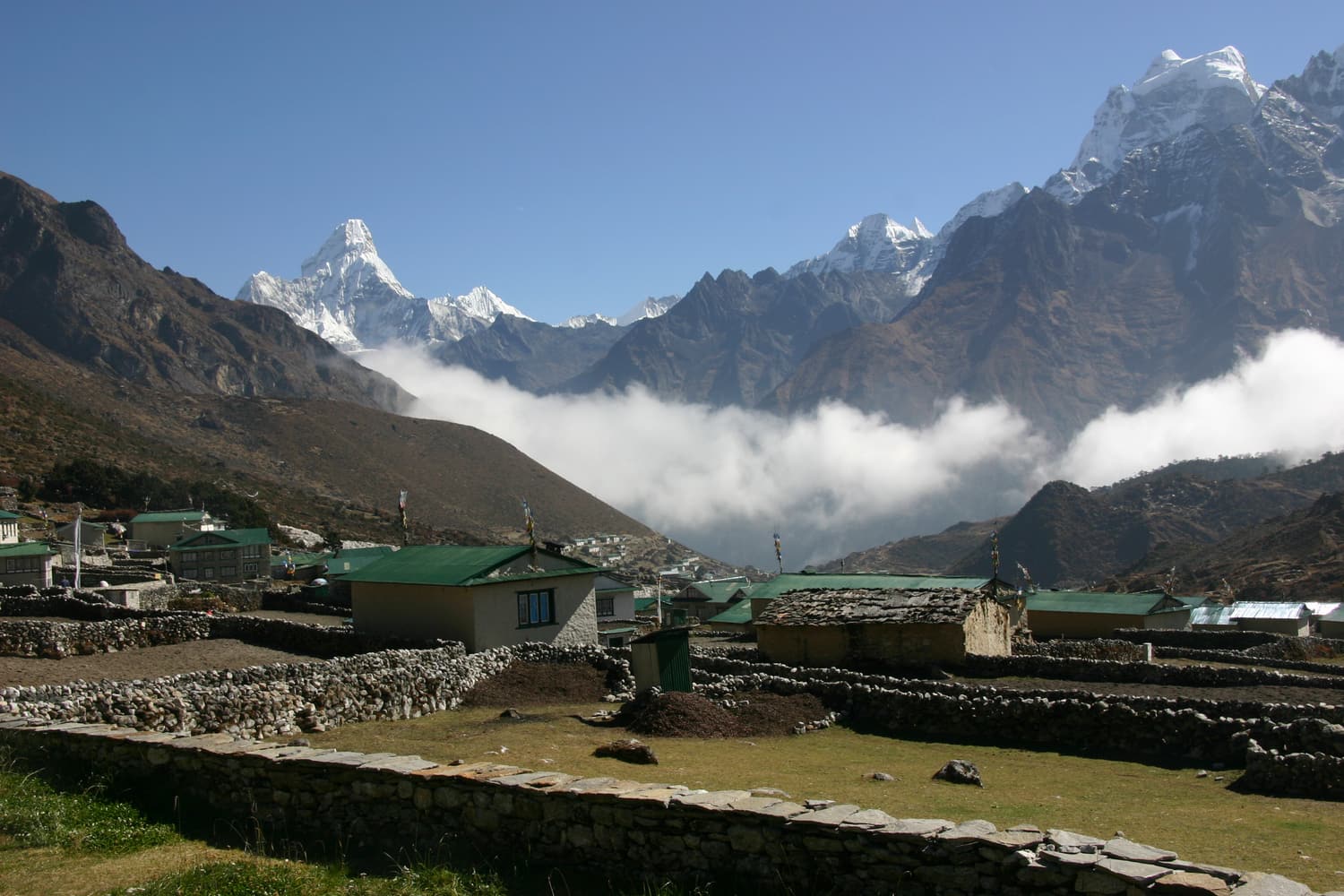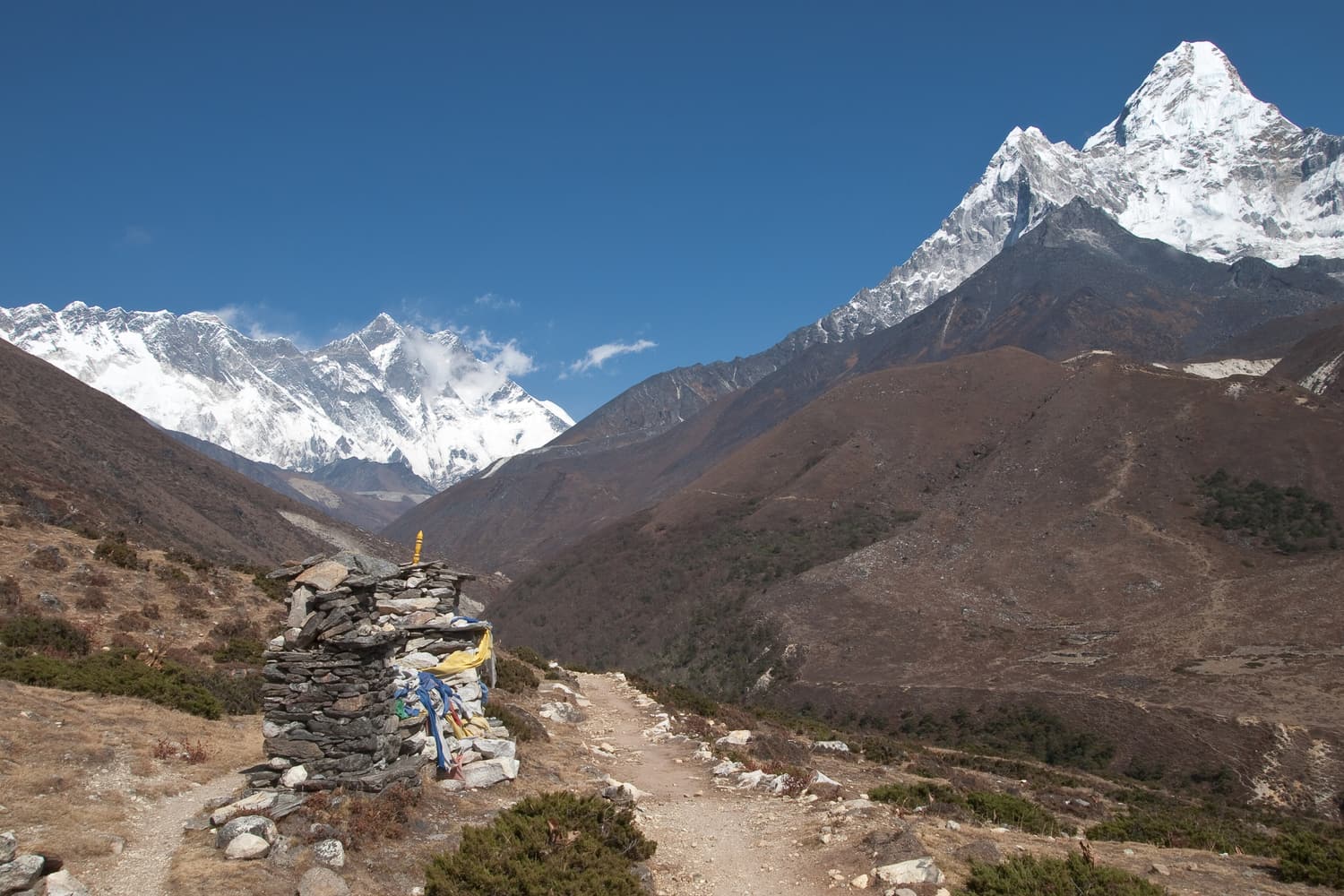
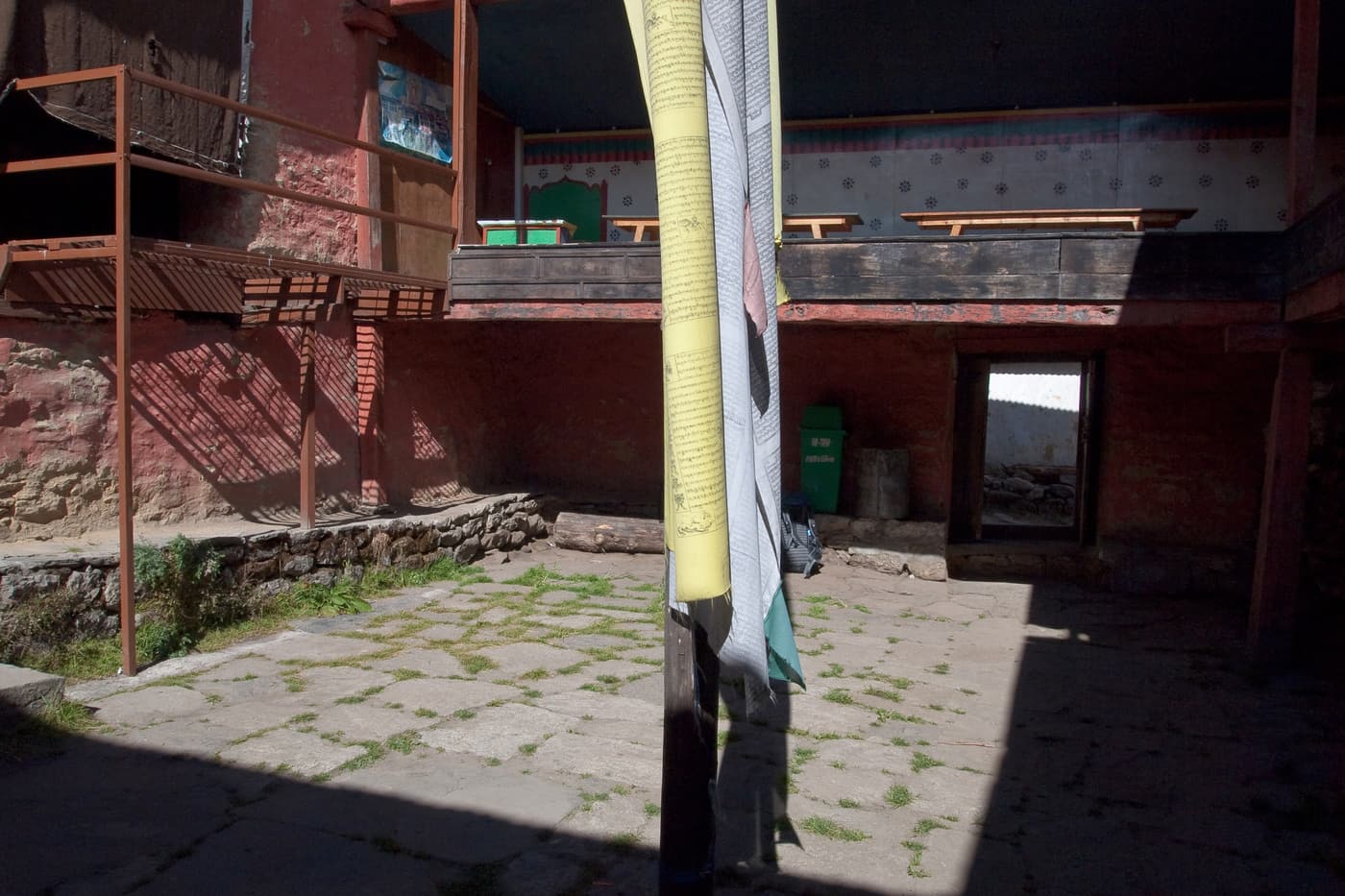
Pangboche (about 3,985 m) is the highest village in the Imja valley that is lived in all year. Its upper part gathers around a monastery that tradition attributes to Lama Sangwa Dorje, the saint credited with establishing Buddhism in the Khumbu some 350 years ago; it is generally regarded as the oldest gompa in the region.
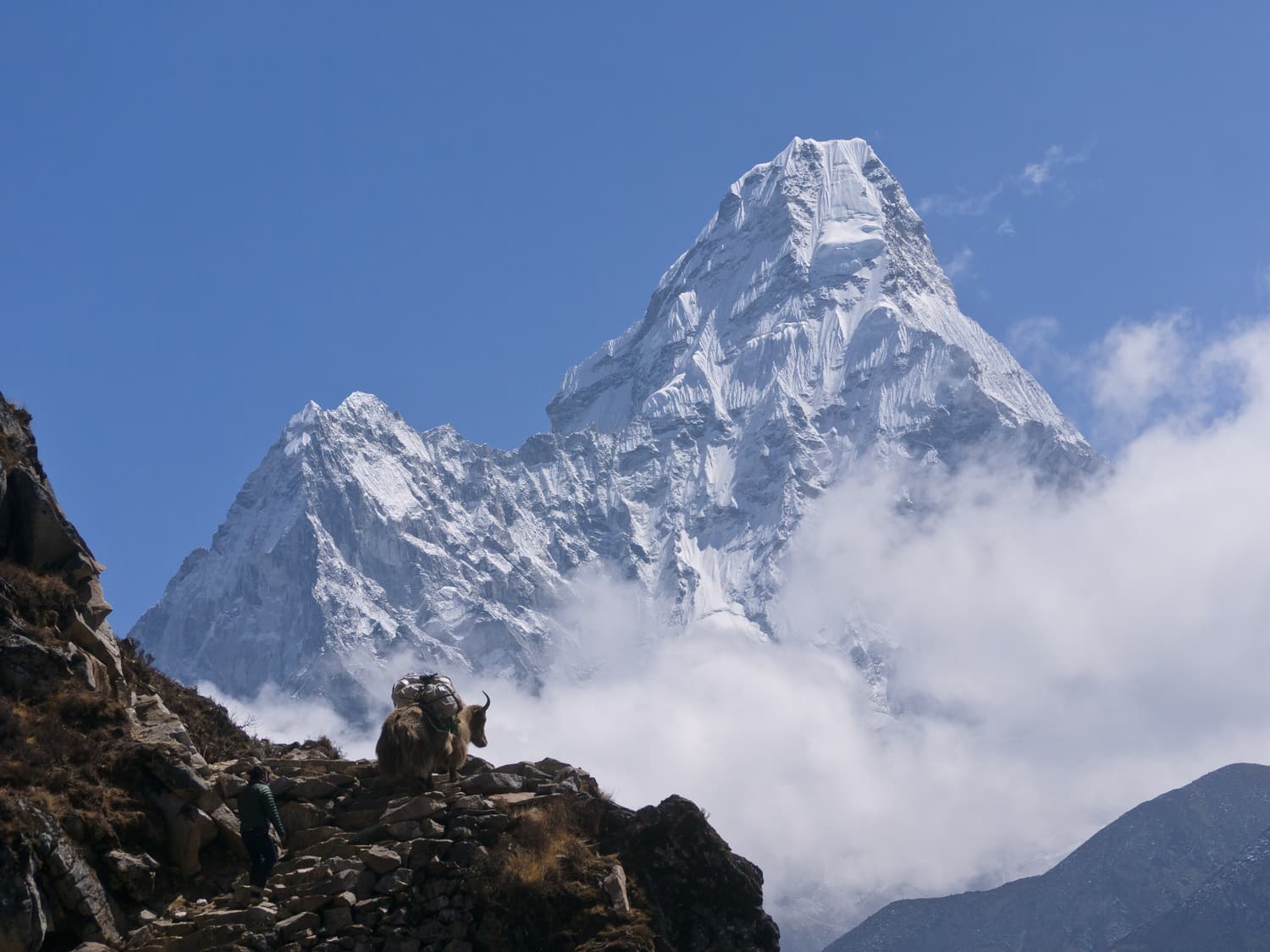
Above the village rises Ama Dablam (6,812 m). Its name, “mother’s necklace”, refers to the hanging glacier on its west face, which resembles the dablam amulet box worn by Sherpa women. The day walk to its base camp is one of the most rewarding side trips in the park.
What to see and do: Pangboche & Ama Dablam Base Camp
Hike to Ama Dablam Base Camp
Cross the Imja Khola below the village and climb steadily for two to three hours to a broad grassy flat at about 4,600 m beneath the mountain’s west face. In autumn it is dotted with expedition tents. Allow five to six hours for the round trip and start early, before cloud builds.
Visit Pangboche gompa
The monastery in upper Pangboche stands among old junipers that legend says sprang from the saint’s hair. It once held a supposed yeti hand and skull-cap; these were stolen in 1991 and replicas are shown today. A caretaker opens the hall for a small donation.
Take the high trail from Phortse
A spectacular balcony path links Pangboche with Phortse, a traditional village across the valley known for its mountaineers and for sightings of tahr, musk deer and — very occasionally — snow leopard tracks.
Continue up the Imja valley
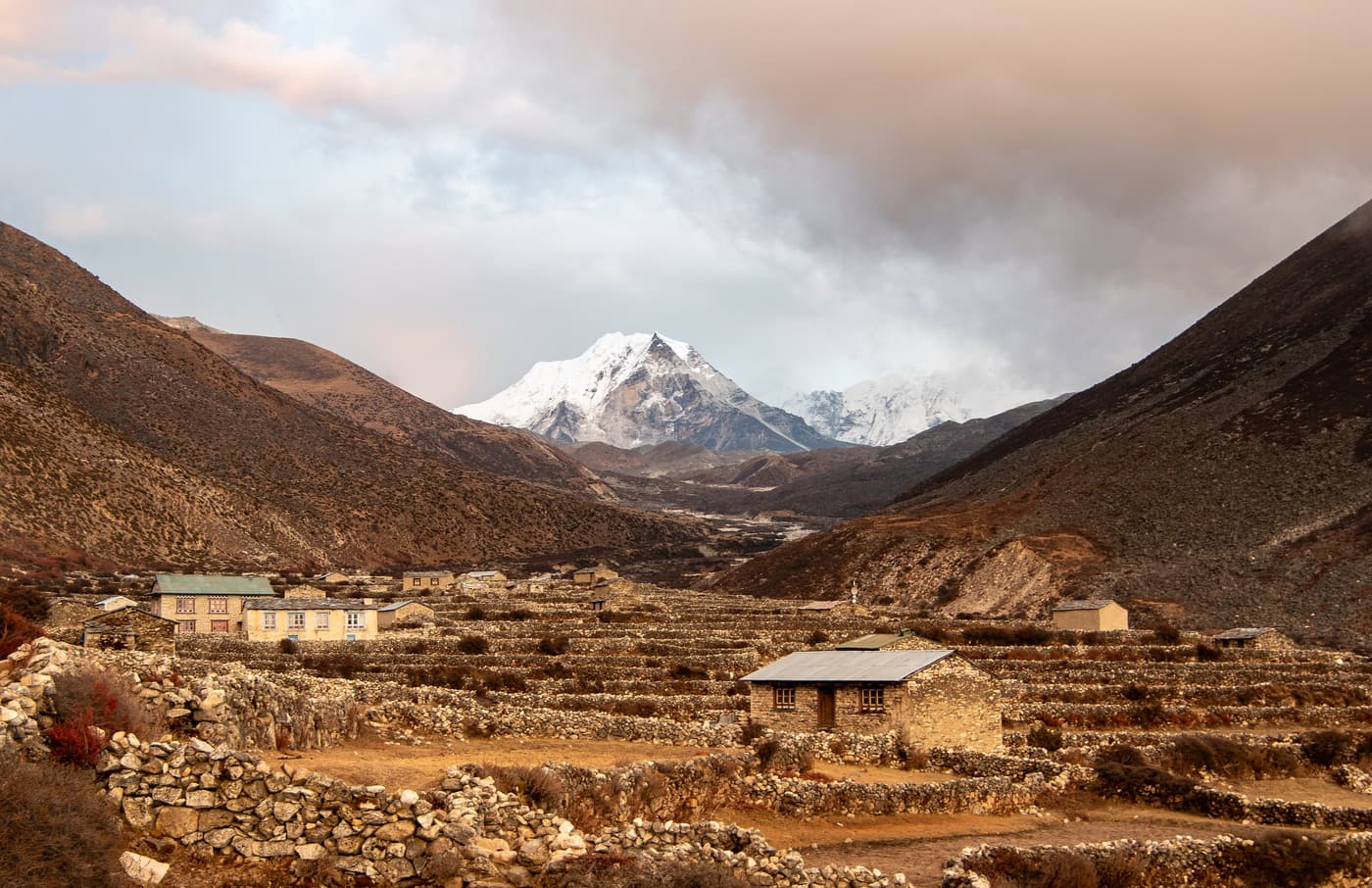
Beyond Pangboche the trees end. Dingboche (4,410 m) and Chhukung (4,730 m) lead to the Imja Glacier, Island Peak and the Kongma La.
Getting to Pangboche & Ama Dablam Base Camp
- From Tengboche: about two hours via Deboche and a bridge over the Imja Khola.
- From Namche Bazaar: a long day of six to seven hours; most people break the journey at Tengboche or Phortse.
- Guided treks: eight-to-ten-day Ama Dablam Base Camp itineraries from Kathmandu use Pangboche as their base.
Visitor tips
- Base camp is some 600 m higher than the village. Go only once you have slept at Namche and Tengboche or Pangboche, and turn back if you develop a headache.
- There are no lodges on the way; carry water, snacks and warm layers.
- Stay in upper Pangboche for the gompa and quieter lodges.
- Many Pangboche families work on expeditions. Lodge owners here are a rich source of mountain stories — ask.
Treks & tours that include Pangboche & Ama Dablam Base Camp
These guided experiences are the easiest way to reach Pangboche & Ama Dablam Base Camp:
 Guided trek from €1363
 From Kathmandu: 8-Day Ama Dablam Base Camp Trek
A week-long trek through Namche Bazaar and Tengboche to Pangboche, with a day walk up to the meadow of Ama Dablam Base Camp beneath the mountain’s great west face. A fine choice when you have about a week and want more than a viewpoint.
- Base camp of the park’s most beautiful peak (about 4,600 m)
- Tengboche Monastery and Pangboche village
- Shorter and lower than the Base Camp trek
 Guided trek from €850
 From Kathmandu: 12-Day Everest Base Camp Guided Trek
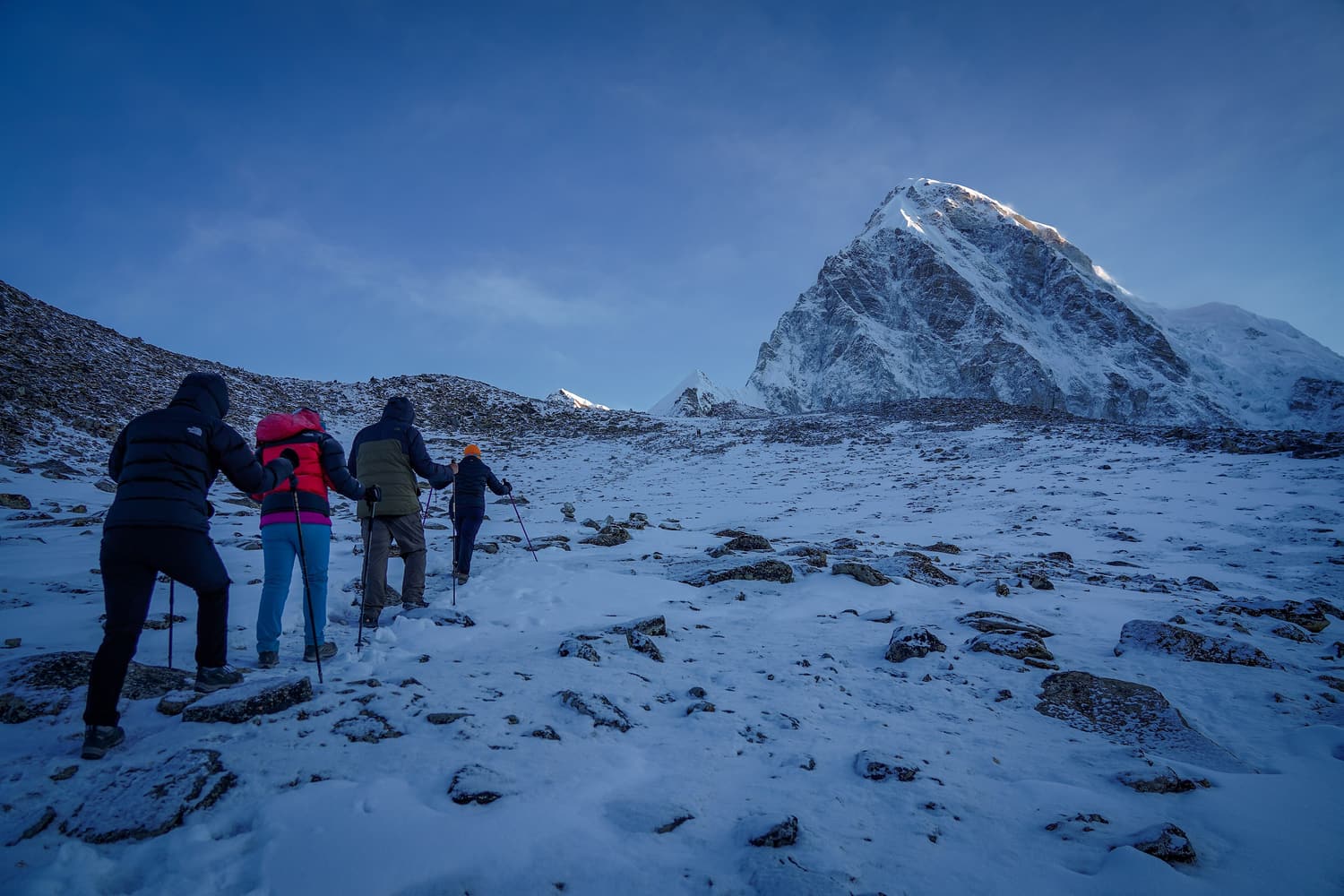
The best-known walk in the park: Lukla to Namche Bazaar, Tengboche, Dingboche and Gorak Shep, then Everest Base Camp and the sunrise viewpoint of Kala Patthar. A well-paced twelve-day programme with consistently top reviews.
- The park’s classic route with a licensed guide
- Acclimatisation days in Namche Bazaar and Dingboche
- Everest Base Camp and Kala Patthar (5,644 m)
Trekking-peak climb from €1114 Island Peak Climbing: Summit 6,189 m with Expert Guides
Island Peak (Imja Tse) is the park’s most-climbed “trekking peak”: a real mountaineering day with crampons, ice axe and fixed ropes, usually tacked on to a trek up the Imja valley. Requires excellent fitness and proper acclimatisation.
- A 6,189 m summit inside the national park
- Climbing guide and peak permit arranged
- Glacier travel with fixed ropes near the top