“Sherpa” is not a job title. It is the name of a people — shar-pa, “people from the east” — whose ancestors are believed to have left Kham in eastern Tibet and crossed the Nangpa La into the Khumbu around five hundred years ago. They brought the Tibetan language from which Sherpa derives, the Nyingma school of Buddhism, and a way of life based on yak herding, high-altitude farming and trade across the passes.
A sacred valley
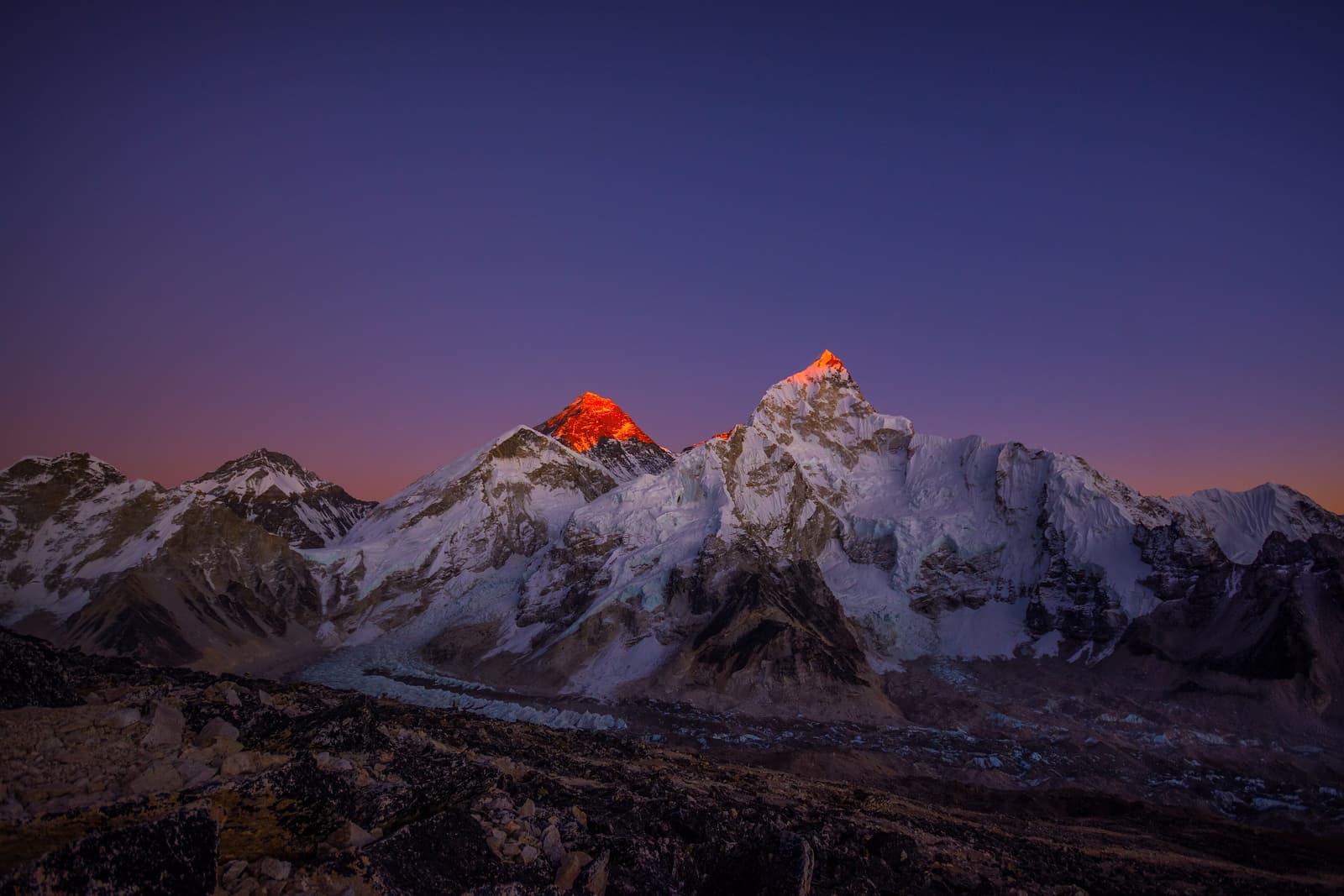
In Sherpa tradition the Khumbu is a beyul, one of the hidden valleys blessed by Guru Rinpoche (Padmasambhava) as a refuge in times of trouble. In a beyul no living thing should be harmed — which is one reason no animals are slaughtered in the upper Khumbu and why wildlife here is unusually trusting. The mountains themselves are the homes of deities: Khumbila, above Khumjung, is the protector god of the region and is not climbed, and Chomolungma (Everest) is the abode of Miyolangsangma, a goddess of giving.
That is why every expedition still begins with a puja at Base Camp, when a lama asks permission to climb and the mountaineers’ ice axes and crampons are blessed.
From traders to mountaineers
The potato, which reached the Khumbu in the nineteenth century, allowed the population to grow; the closing of the Tibetan border after 1959 ended most of the salt and wool trade. Mountaineering and then trekking replaced it. Sherpas had worked on Himalayan expeditions from Darjeeling since the early 1900s, and with Tenzing Norgay’s ascent of Everest in 1953 their name became known around the world. Today most families in the park earn part of their living from tourism — as lodge owners, guides, climbing Sherpas, traders or pilots — and Sherpa climbers hold most of the records on Everest.
Edmund Hillary spent much of his later life repaying a debt of friendship. Through the Himalayan Trust he and the villagers built the school at Khumjung (1961), the hospital at Khunde (1966), further schools and clinics, bridges and the airstrip at Lukla, and helped rebuild Tengboche after its fire.
Villages worth your time
| Village | Altitude | What to see |
|---|---|---|
| Namche Bazaar | 3,440 m | Saturday market, Sherpa Culture Museum, park visitor centre, Namche gompa |
| Khumjung | 3,790 m | Hillary school, gompa with the “yeti scalp”, long mani wall |
| Khunde | 3,840 m | Hospital founded in 1966, Hillary memorial viewpoint |
| Thame | 3,800 m | Cliff-side gompa, spring Mani Rimdu, Tenzing Norgay’s childhood home |
| Tengboche | 3,867 m | Principal monastery of the Khumbu, autumn Mani Rimdu |
| Pangboche | 3,985 m | Oldest gompa in the region, home of many climbing Sherpas |
| Phortse | 3,810 m | Traditional farming village, climbing school, wildlife |
Each has its own page under places in the park.
Gompas
A gompa is a Buddhist monastery or village temple. Inside, the walls are painted with protector deities, the wheel of life and scenes from the lives of the Buddha and Guru Rinpoche; shelves hold cloth-wrapped scriptures; butter lamps burn before the statues. Tengboche is the largest and has a resident community of monks; Pangboche is held to be the oldest; Thame and Khumjung are village gompas served by married lamas as well as monks; and there are nunneries at Deboche and Thamo.
Most gompas welcome visitors when the caretaker is present. Offer a small donation, take off your shoes and hat, move clockwise around the hall, and ask before taking photographs.
Mani walls, chortens and prayer flags
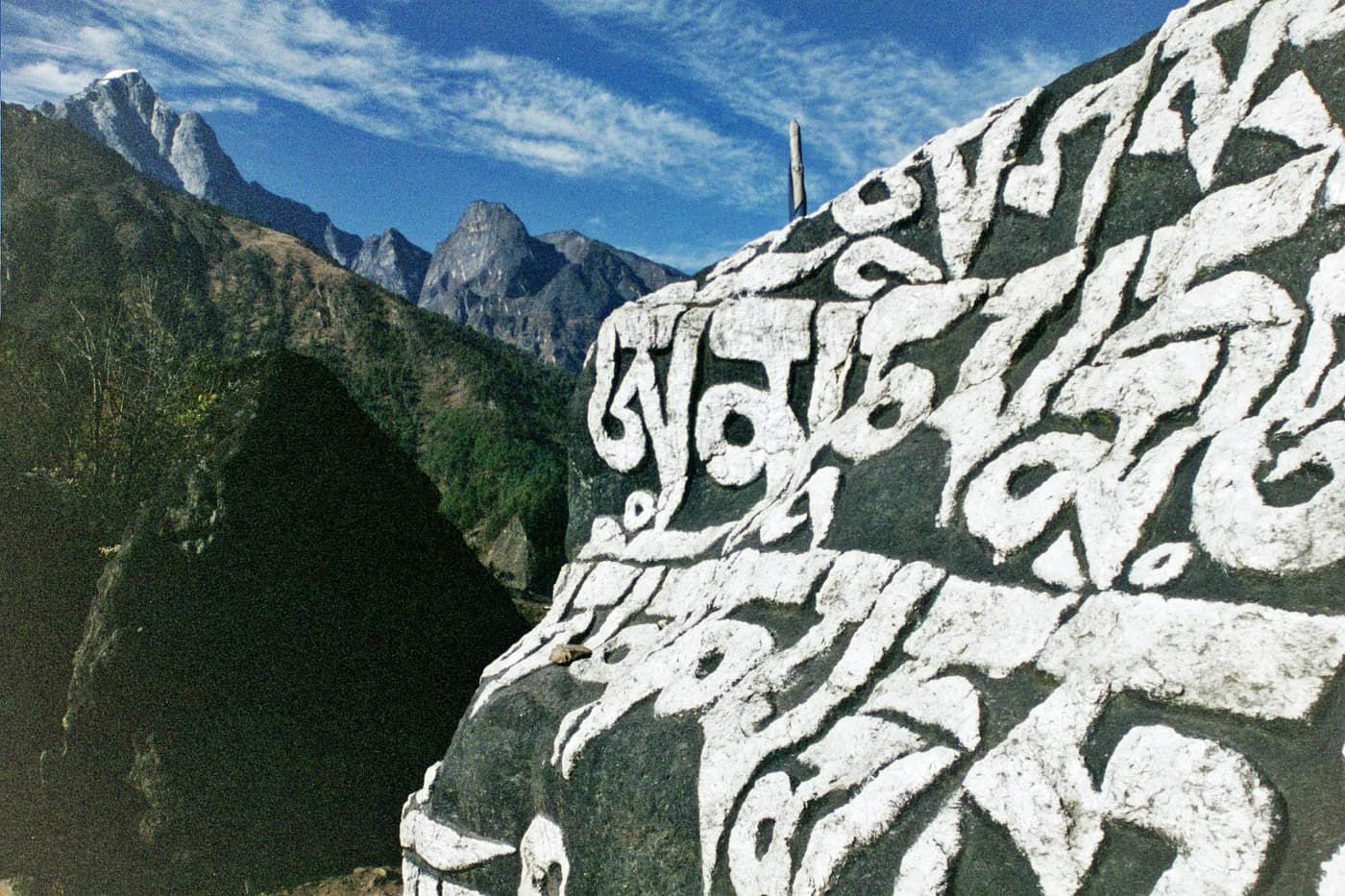
- Mani stones and mani walls. Slabs and boulders carved with mantras, above all Om mani padme hum, the mantra of the bodhisattva of compassion. Carving and placing them earns merit, and walls can run for tens of metres.
- Chortens (stupas). Whitewashed reliquary monuments marking the entrances to villages, passes and sacred places. Their shape symbolises the elements and the path to enlightenment.
- Prayer wheels. Cylinders filled with printed mantras, turned by hand — or by a stream — so that each revolution repeats the prayers inside.
- Prayer flags. Printed with mantras and the lungta or wind-horse, in five colours for the five elements. The wind is believed to carry their blessing across the land.
- Kani gates. Arched gateways at the entrance to villages, painted inside with mandalas, which cleanse those who pass through.
The rule for all of them is the same: keep them on your right. Pass mani walls and chortens on the left-hand side, so that you walk around them clockwise, and spin prayer wheels clockwise too.
Festivals
Mani Rimdu
The Khumbu’s great public festival is a nineteen-day sequence of ritual that ends with three days open to everyone. At Tengboche it falls in the tenth Tibetan month, usually late October or November, at the height of the autumn trekking season; Thame holds its own in spring, usually May, and Chiwong monastery in Solu, south of the park, follows in late autumn.
- First public day — the blessing (wong). The abbot gives a long-life empowerment, and blessed pills (rilbu, the “rimdu” of the name) are distributed to the crowd.
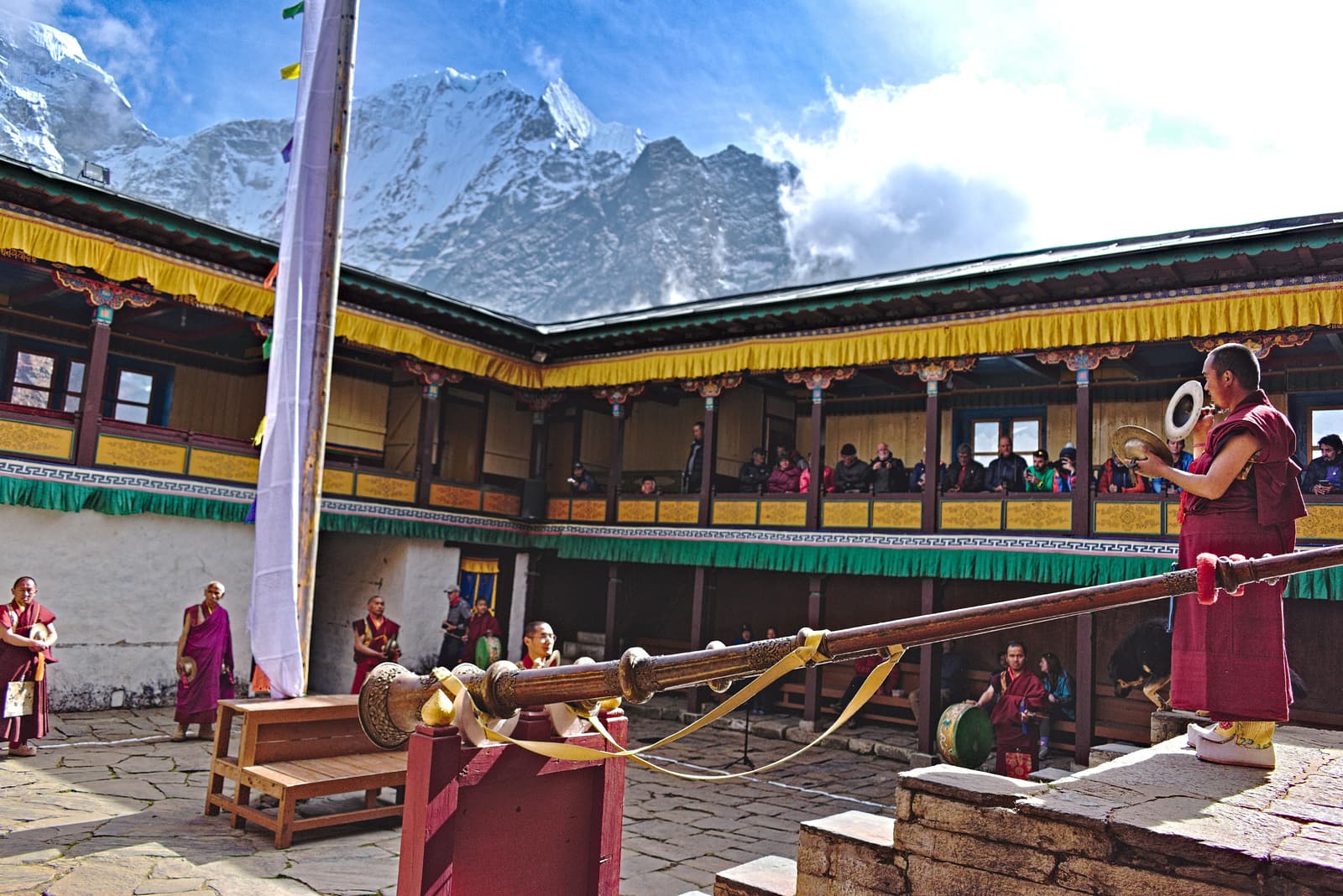
- Second day — the dances (cham). Monks in brocade and carved masks perform a cycle of sacred dances in the courtyard, depicting the victory of Buddhism over the older spirits of the land, interleaved with comic interludes that villagers love.
- Third day — the fire ritual (jinsak). Offerings are burned to dispel harm, and the sand mandala made for the festival is swept away.
Dates follow the lunar calendar and are confirmed by the monastery each year. Lodges at Tengboche and Deboche fill early; expect crowds, and remember that it is a religious event first.
Dumje
Dumje is the villages’ own festival, held in early summer — the fifth Tibetan month, usually June or early July — in Namche, Khumjung, Pangboche, Thame and elsewhere. It honours Guru Rinpoche and Lama Sangwa Dorje, the Khumbu’s founding saint, and is hosted by a rota of families who feed the whole village for several days. Because it falls in the monsoon, few visitors see it.
Losar and others
Losar, the Tibetan and Sherpa New Year, falls in February or early March and is celebrated at home with feasts, new prayer flags and visits. Saga Dawa in May or June marks the Buddha’s birth, enlightenment and passing, and Janai Purnima in August brings pilgrims to the Gokyo Lakes.
Etiquette for visitors
- Walk clockwise around mani walls, chortens, prayer wheels and gompas.
- Greet people. “Namaste” works everywhere; “Tashi delek” is the Sherpa and Tibetan greeting.
- Ask before photographing people, ceremonies and the inside of temples. Accept a refusal with grace.
- Dress modestly in villages and gompas: covered shoulders and knees.
- Do not touch anyone on the head, point the soles of your feet at people or altars, or step over food or religious objects.
- Do not sit on or move mani stones, and never take one as a souvenir.
- Use your right hand, or both, to give and receive.
- The hearth is sacred. Do not throw rubbish into the lodge stove.
- Do not hand out sweets or money to children. Give to the school or the monastery instead.
- Give way to yaks and porters, standing on the uphill side of the trail.
Food and hospitality
The staples are potatoes, buckwheat and barley. Try rigi kur (potato pancakes with butter and cheese), shyakpa (Sherpa stew), tsampa (roasted barley flour), momos and salted butter tea — an acquired taste that makes sense at −10 °C. Your cup will be refilled the moment you sip from it; to stop, leave it full. Chang, a milky barley or rice beer, appears at every celebration.
Names you will hear
Many Sherpas are named for the day of the week on which they were born: Dawa (Monday), Mingma (Tuesday), Lhakpa (Wednesday), Phurba (Thursday), Pasang (Friday), Pemba (Saturday) and Nima (Sunday), often combined with a second name. Which explains why you may meet several Pasangs in one lodge.