Sagarmatha National Park is built like an open hand: four high valleys — Thame, Gokyo, Khumbu and Imja — spread north from Namche like fingers. The Three Passes trek links them all by crossing the ridges in between, and is the most complete journey the park offers.
The passes are Kongma La (about 5,535 m) between the Imja and Khumbu valleys, Cho La (about 5,420 m) between Khumbu and Gokyo, and Renjo La (about 5,360 m) between Gokyo and Thame. None requires technical climbing in good conditions, but each is a long day at extreme altitude, and all can be closed by snow.
What to see and do: The Three Passes
Kongma La (5,535 m)
The highest and loneliest pass, usually crossed from Chhukung to Lobuche. There are no lodges for seven to nine hours, and the day ends with a rough crossing of the Khumbu Glacier’s moraine. Small lakes below the pass and a sweeping view of Lhotse, Makalu and Ama Dablam are the reward.
Cho La (5,420 m)
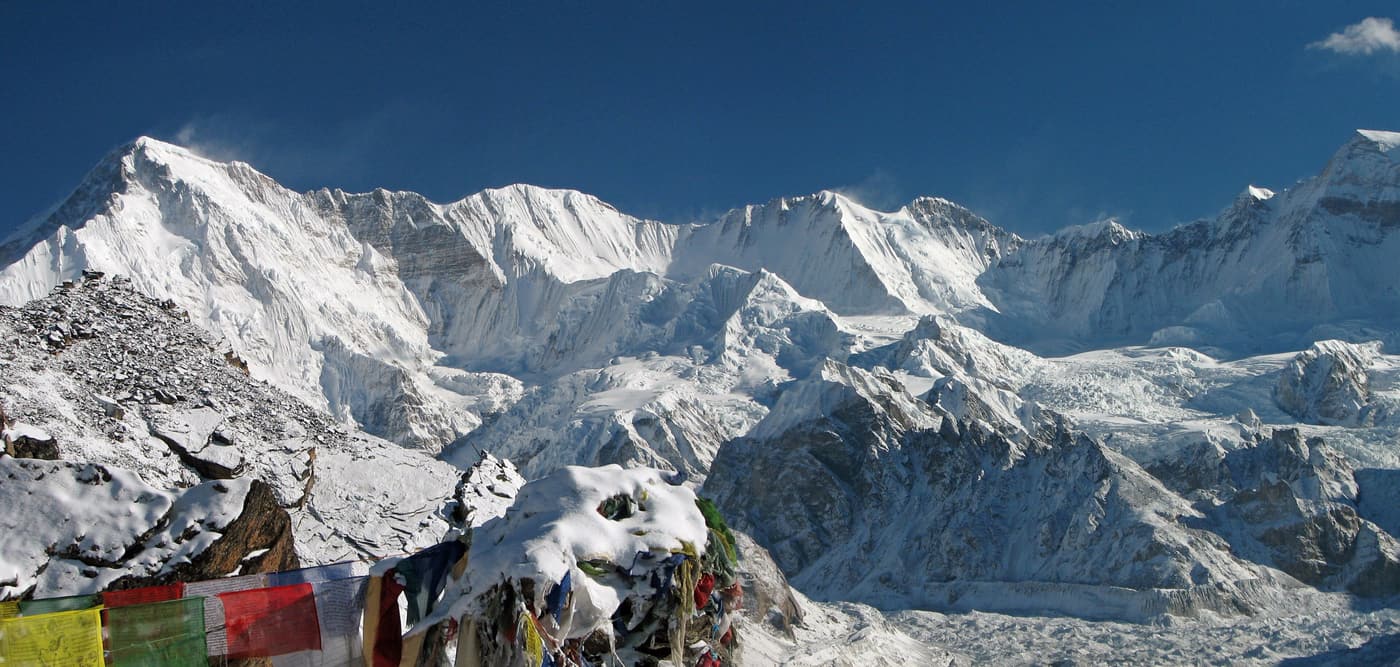
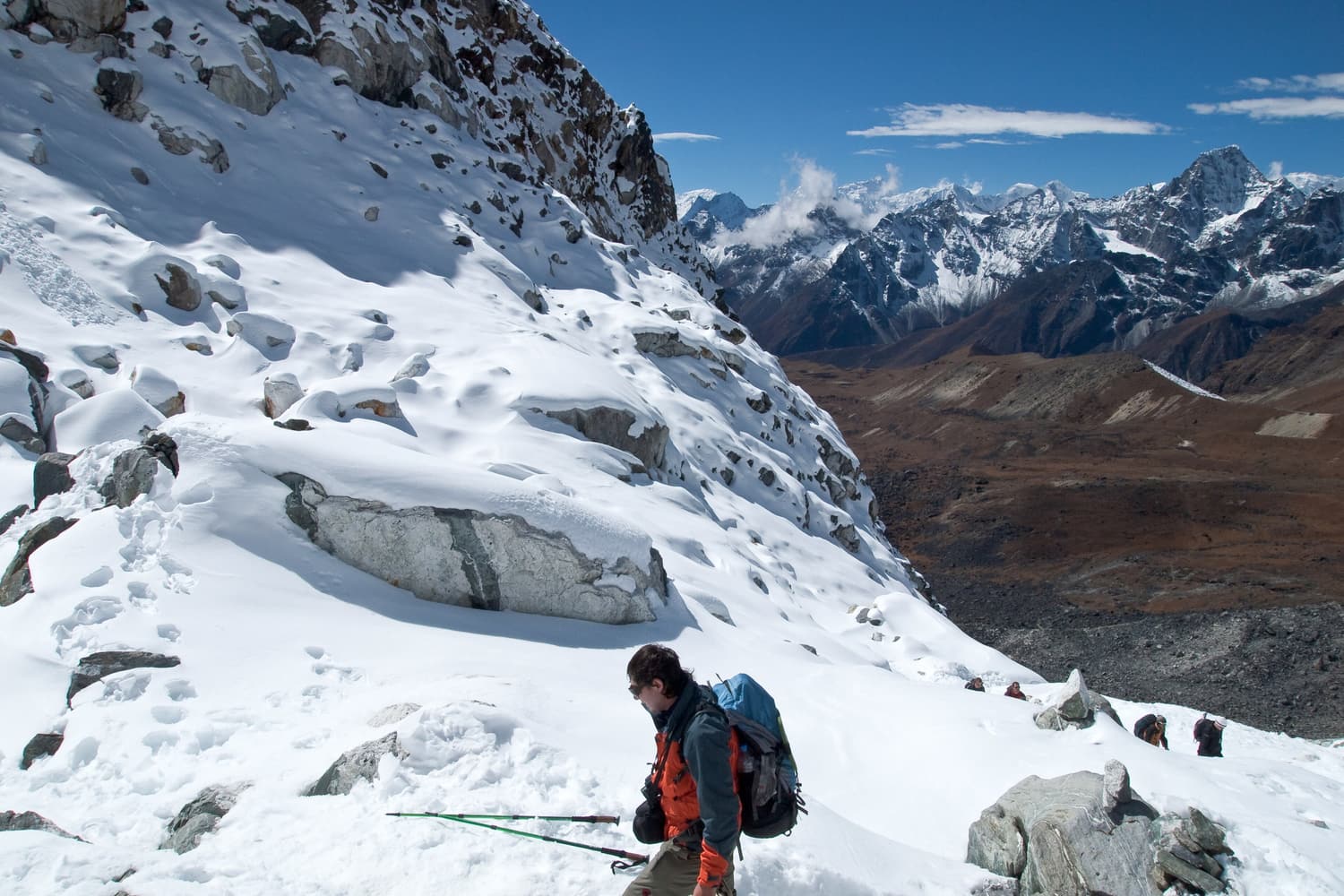
From Dzongla a steep scramble over boulders leads to a small glacier, which is crossed on a trodden path. Microspikes are very useful, and essential after fresh snow. The descent to Thangnak is long and loose; Gokyo lies across the Ngozumpa Glacier beyond.
Renjo La (5,360 m)
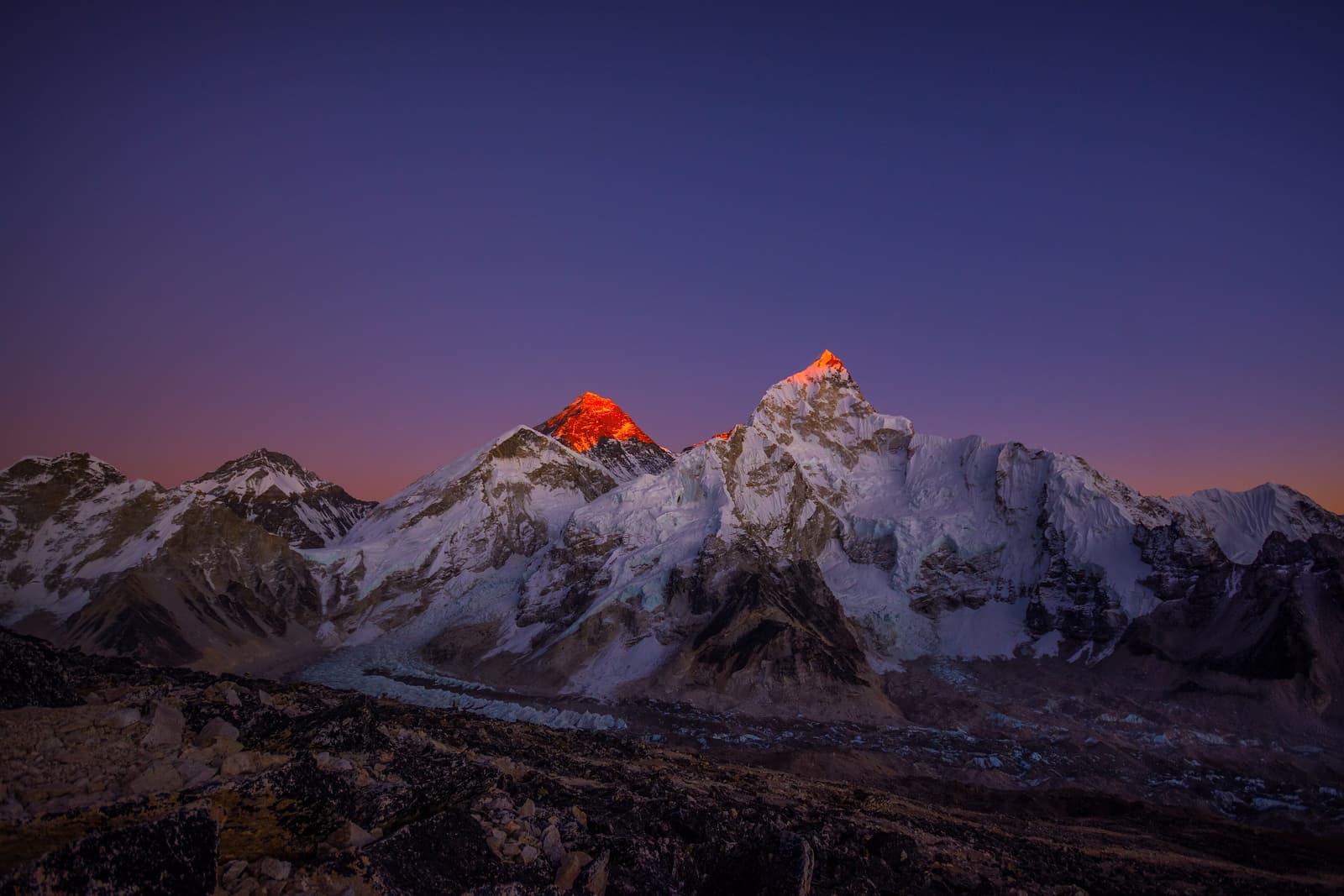
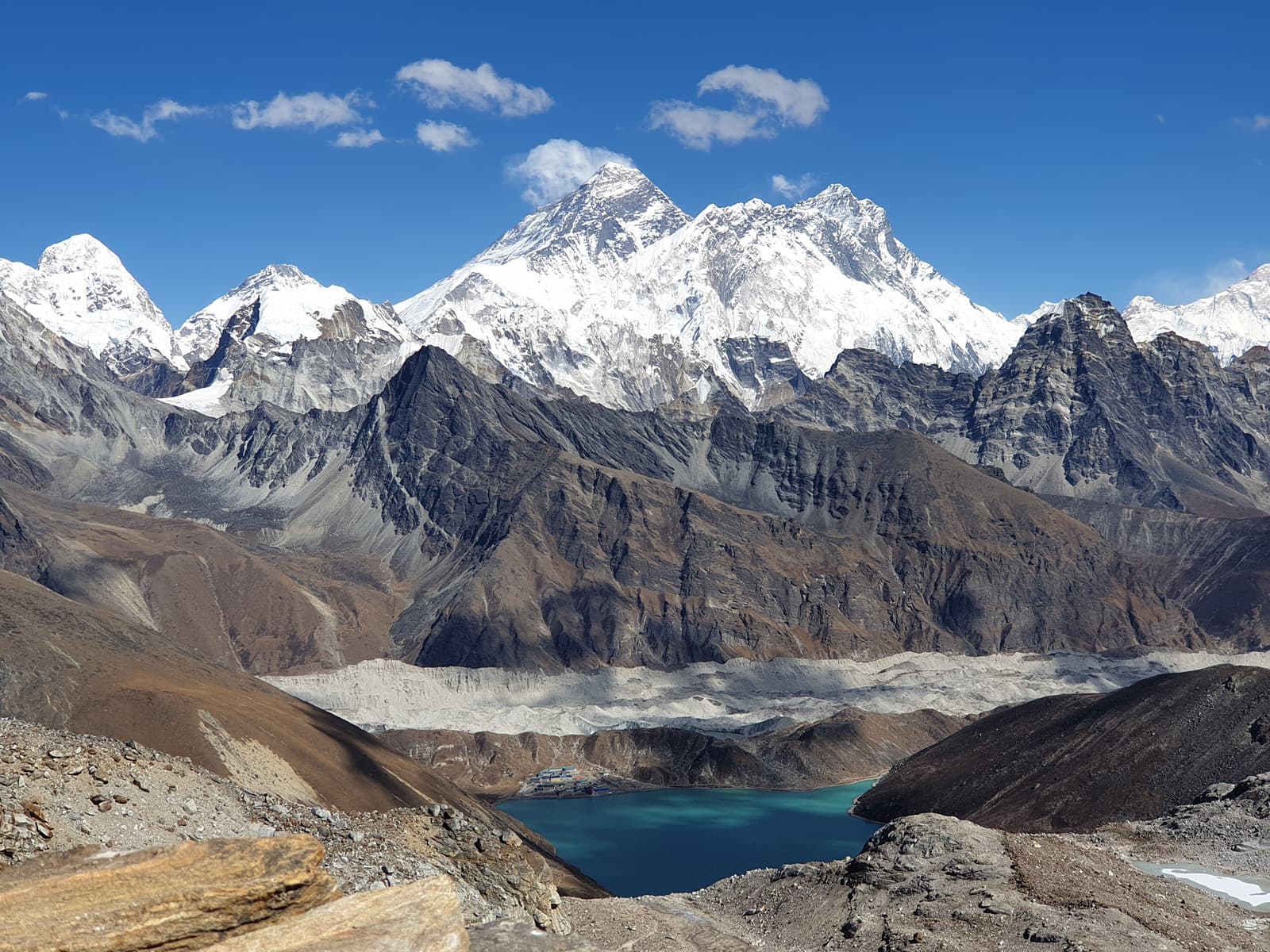
Stone steps lead up from Gokyo’s lake to perhaps the finest pass view of all: Everest, Lhotse and Makalu ranged above the turquoise water. The far side descends past small lakes to Lungden and the quiet valley of Thame.
Add the side summits
Most circuits also climb Chhukung Ri (about 5,550 m), Kala Patthar and Gokyo Ri, and visit Everest Base Camp — which is why 18–21 days is a realistic length.
Getting to The Three Passes
- Direction: most people walk anticlockwise (Kongma La first) for the best acclimatisation profile; clockwise is possible and leaves the hardest pass until last.
- Start and finish: Lukla, via Namche Bazaar both ways.
- Shorter options: cross just one pass — Cho La to combine Base Camp with Gokyo, or Renjo La to return from Gokyo via Thame.
Visitor tips
- This is not a first Himalayan trek. You should be used to consecutive 7–9 hour days and have been above 4,500 m before.
- Go with a guide who knows the passes: route-finding on the glaciers and in poor visibility is a real hazard.
- Carry microspikes, a head torch, a warm sleeping bag and enough food and water for each pass day.
- Build in spare days. Snow can close a pass for several days, most often in winter and after storms in spring.
Treks & tours that include The Three Passes
These guided experiences are the easiest way to reach The Three Passes:
 Challenging guided trek from €1559
 Everest Three High Passes Trek: 17-Day Guided Trek
The complete circuit of Sagarmatha National Park: three passes above 5,300 m link the Imja, Khumbu, Gokyo and Thame valleys, taking in Base Camp, Kala Patthar and Gokyo Ri on the way. Long, high and demanding — for fit, experienced trekkers.
- Kongma La, Cho La and Renjo La — all above 5,300 m
- Everest Base Camp, Kala Patthar and the Gokyo Lakes
- A full circuit of the park’s high valleys
Challenging guided trek from €1782 From Kathmandu: 20-Day Everest Three Passes Trek with Flight
The Three Passes circuit on a more generous twenty-day schedule, which leaves room for acclimatisation and for a day lost to weather. Includes the flights between Kathmandu (or Ramechhap) and Lukla.
- A slower schedule for the three high passes
- Lukla flights included
- Base Camp, Gokyo and the Thame valley
 Guided trek from €1693
 From Lukla: 18-Day Everest Base Camp and Gokyo Lakes Trek
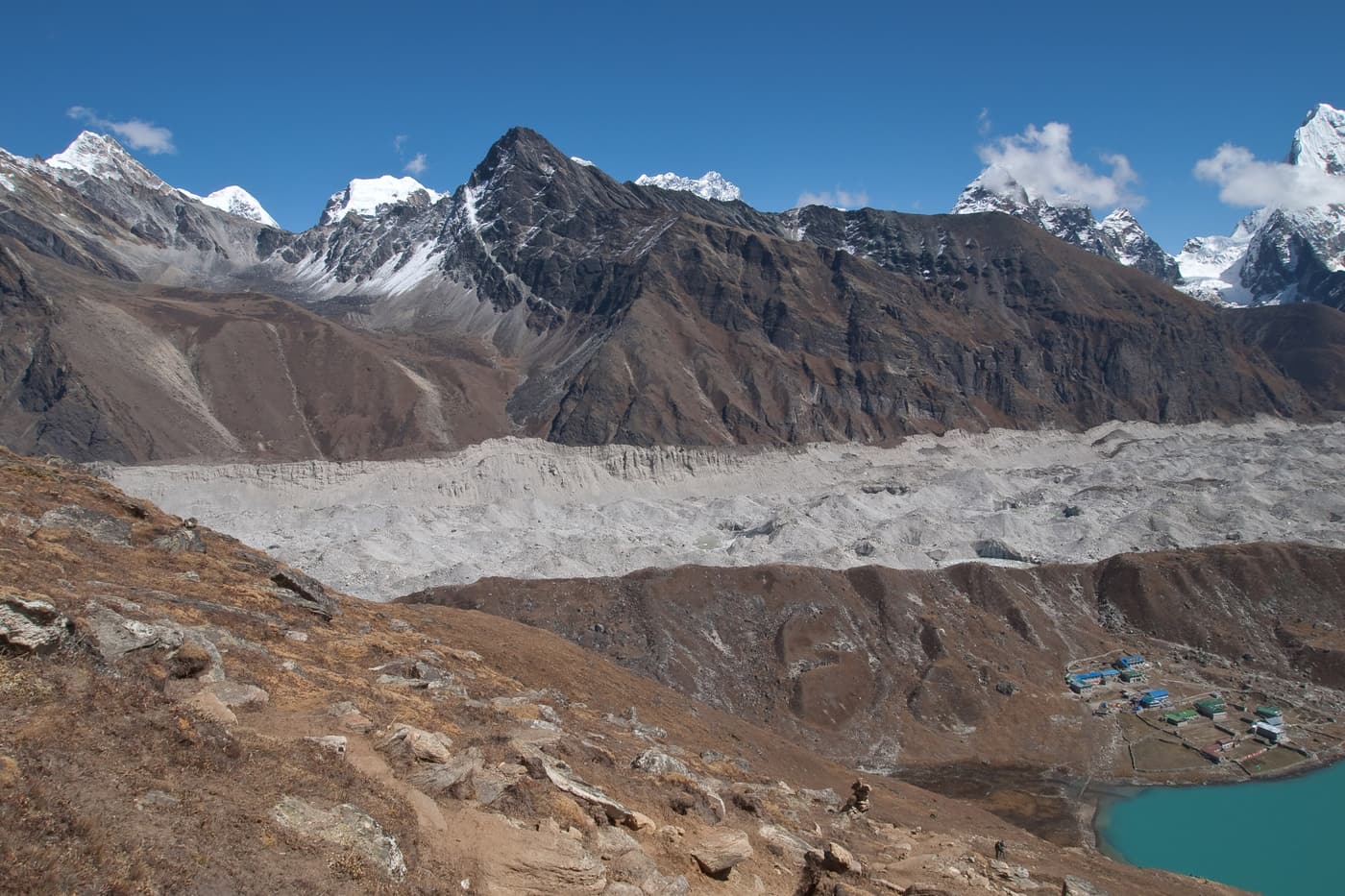
A long trek that joins the park’s two great valleys — Everest Base Camp and Kala Patthar on one side, the Gokyo Lakes on the other — instead of walking the same trail up and down. The trek starts and ends in Lukla, so arrange your own flights.
- Everest Base Camp and Kala Patthar
- Gokyo Lakes and Gokyo Ri
- Two valleys linked in one long trek