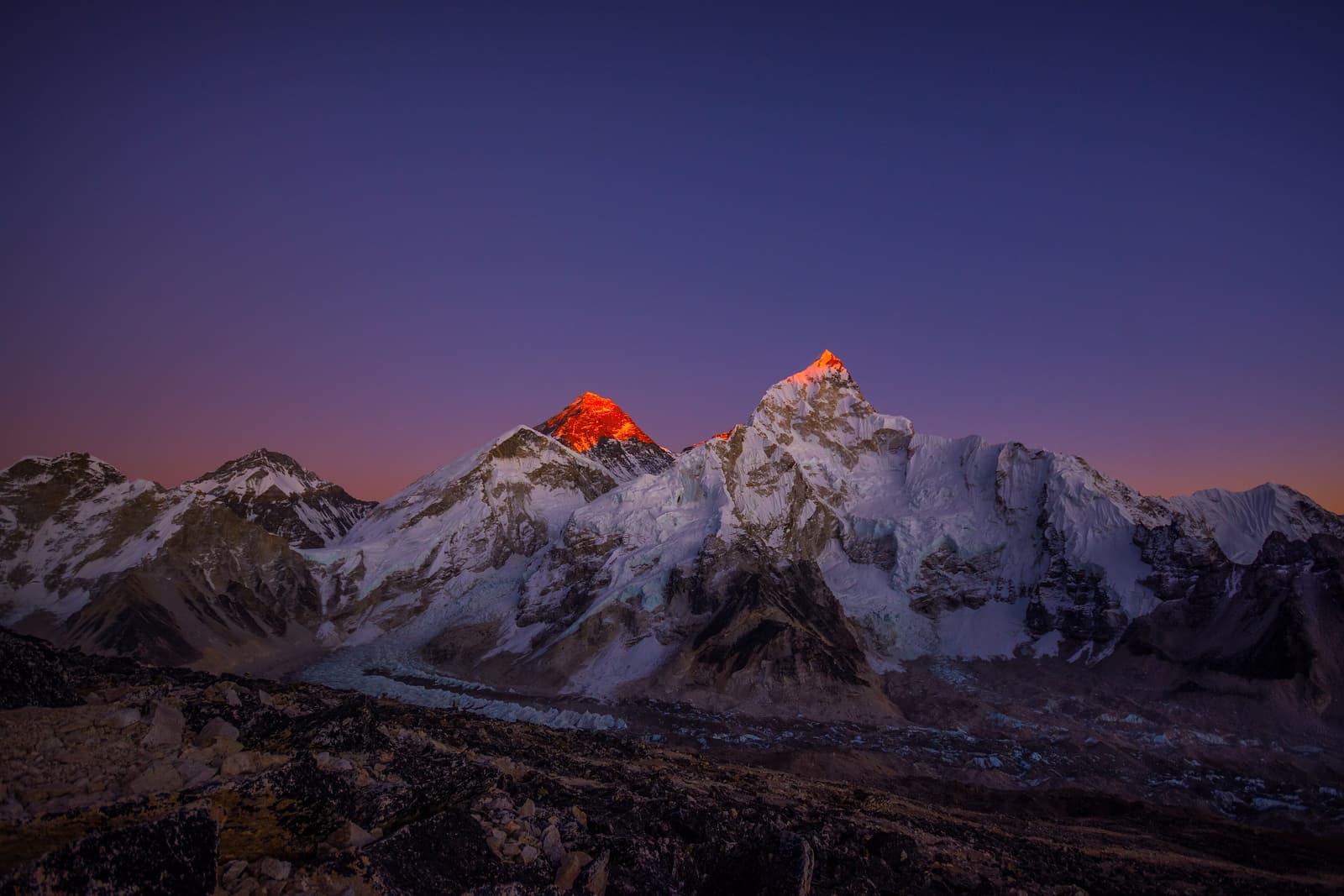
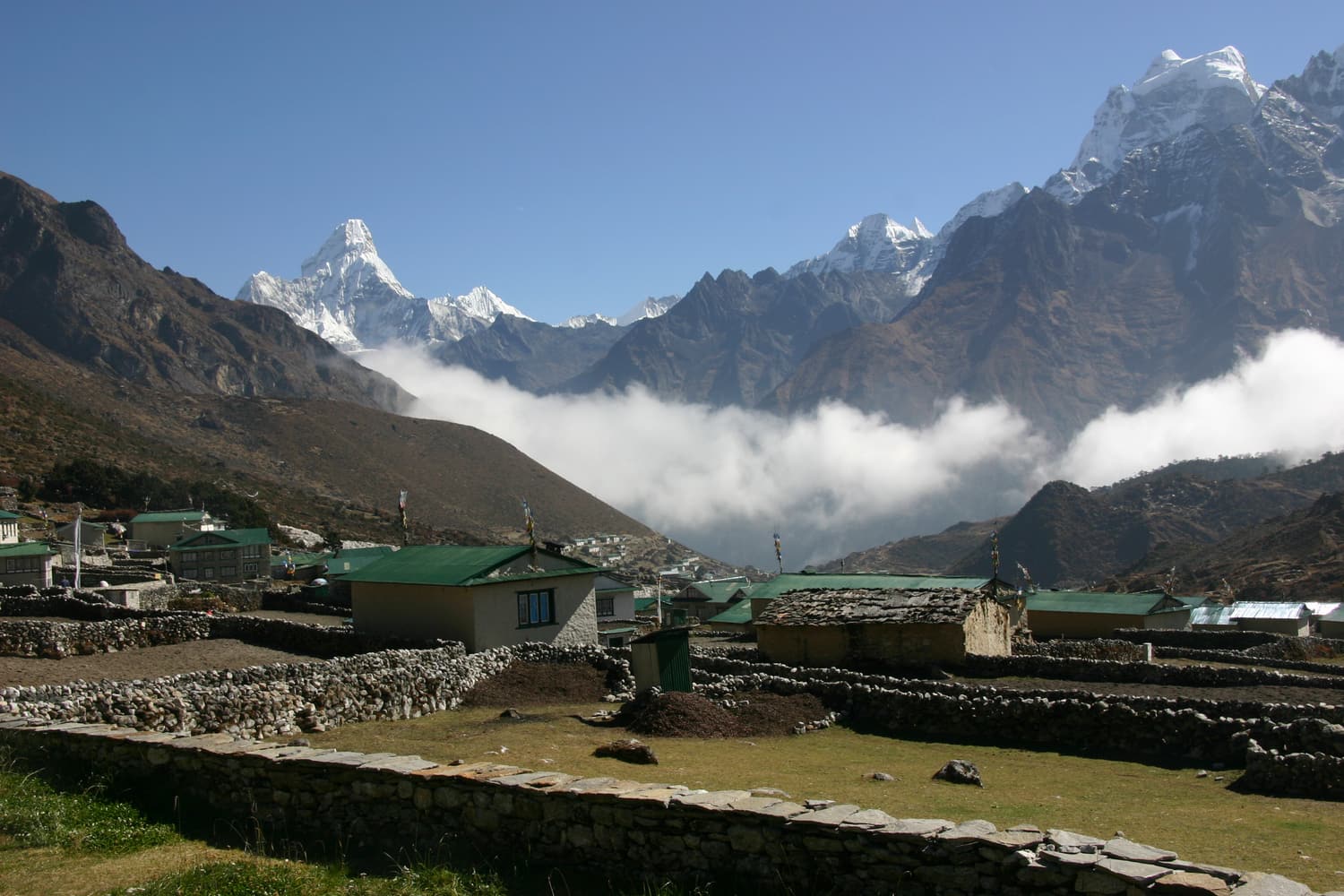
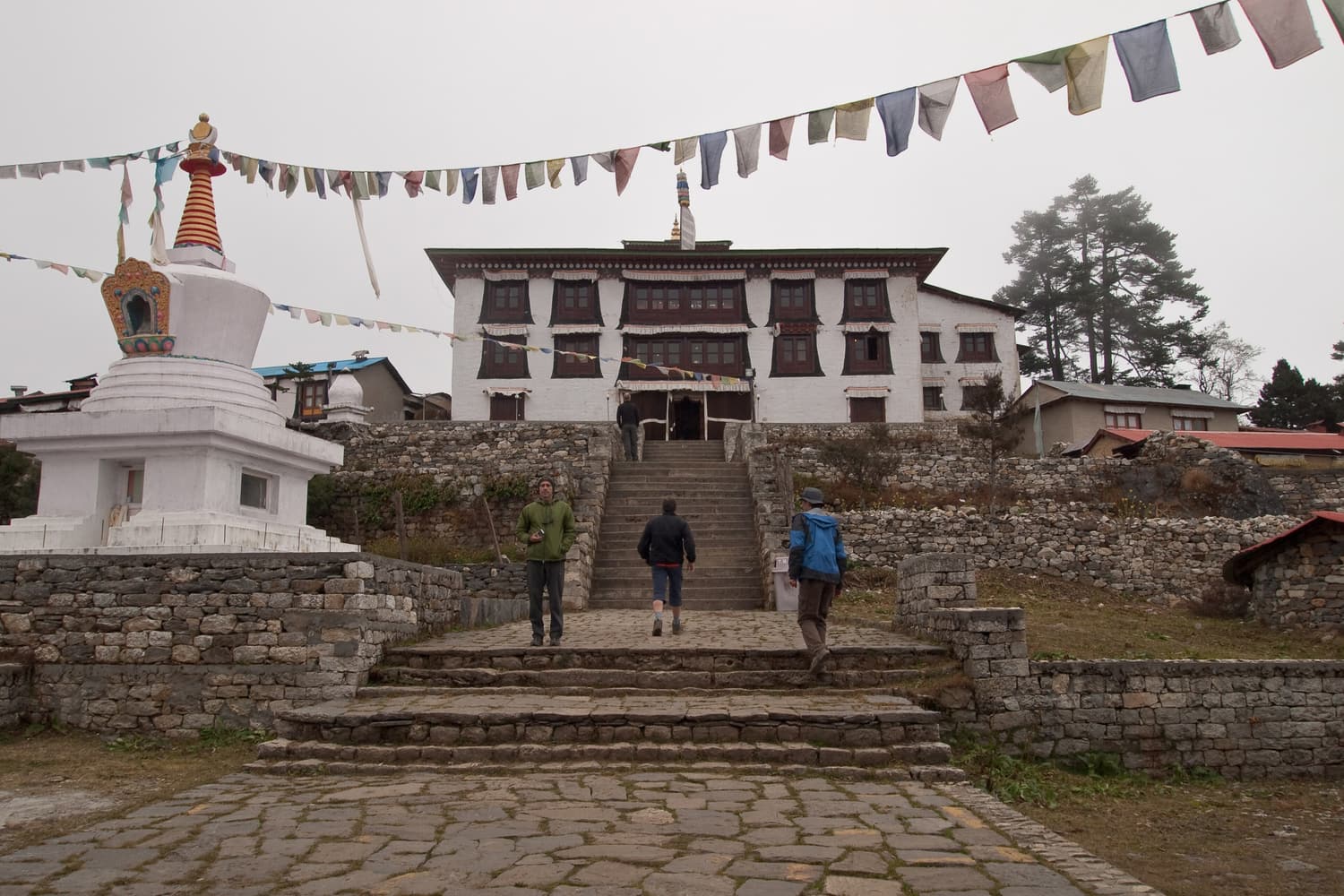
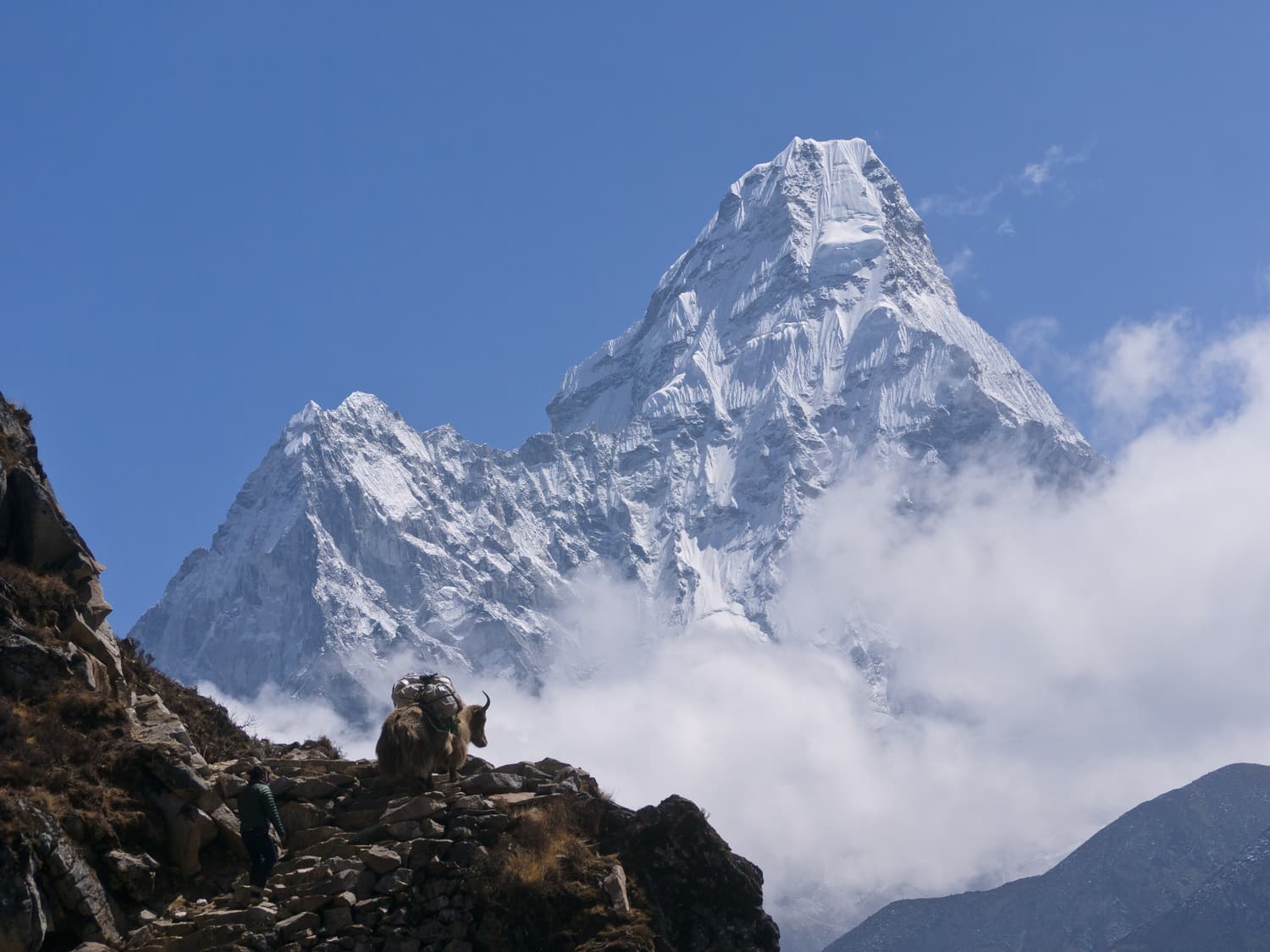
Tengboche (also written Thyangboche) is the largest monastery in the Khumbu and its religious centre. It stands on a level, forested saddle at 3,867 m above the meeting of the Dudh Koshi and Imja Khola, facing one of the great mountain views of the Himalaya: Ama Dablam close at hand, and Everest, Nuptse and Lhotse at the head of the valley.
The monastery was founded in 1916 by Lama Gulu, destroyed in the earthquake of 1934, rebuilt, burned down in 1989 and rebuilt again with local labour and international help. It belongs to the Nyingma school of Tibetan Buddhism and has close ties with Rongbuk monastery on the Tibetan side of Everest.
What to see and do: Tengboche Monastery
Attend prayers
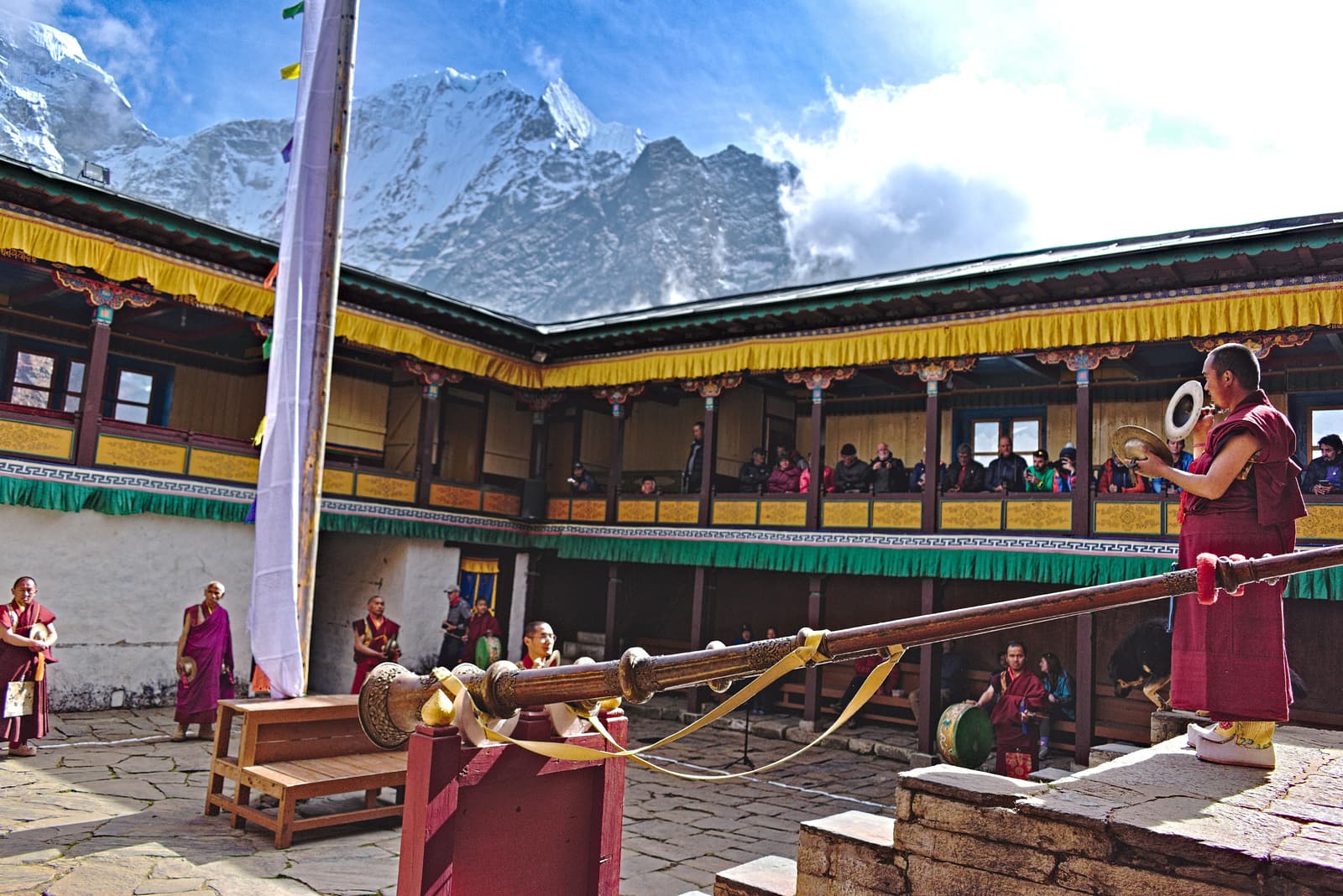
Visitors are usually admitted to the main hall for the monks’ chanting in the early morning and mid-afternoon (times change with the season — ask at your lodge). Remove shoes and hat, sit quietly at the side and do not take photographs during the ceremony.
See Mani Rimdu
The Khumbu’s best-known festival is held here in the tenth month of the Tibetan calendar, usually late October or November. After days of closed ritual, the public days bring a blessing ceremony, masked dances (cham) in the courtyard and a fire ritual. Dates are set by the lunar calendar each year. More in Sherpa culture and festivals.
Watch the light on the peaks
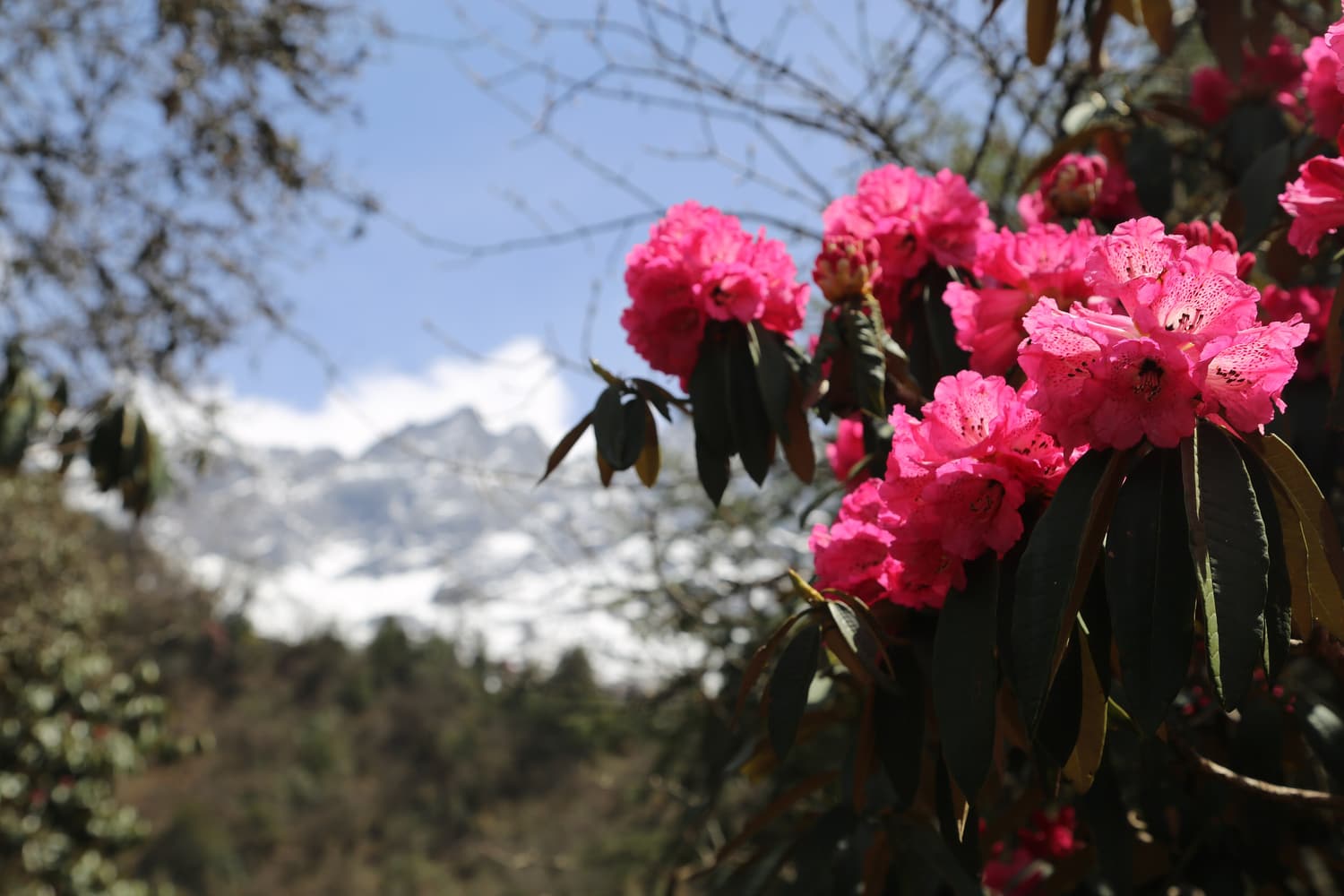
Sunrise and sunset from the meadow in front of the monastery are superb. The forests around the saddle — fir, birch, juniper and rhododendron — are protected and are a good place to see musk deer and pheasants at dawn.
Visit the nunnery at Deboche
Fifteen minutes down through the forest, the small Deboche nunnery is one of the oldest in the region and much quieter than Tengboche.
Getting to Tengboche Monastery
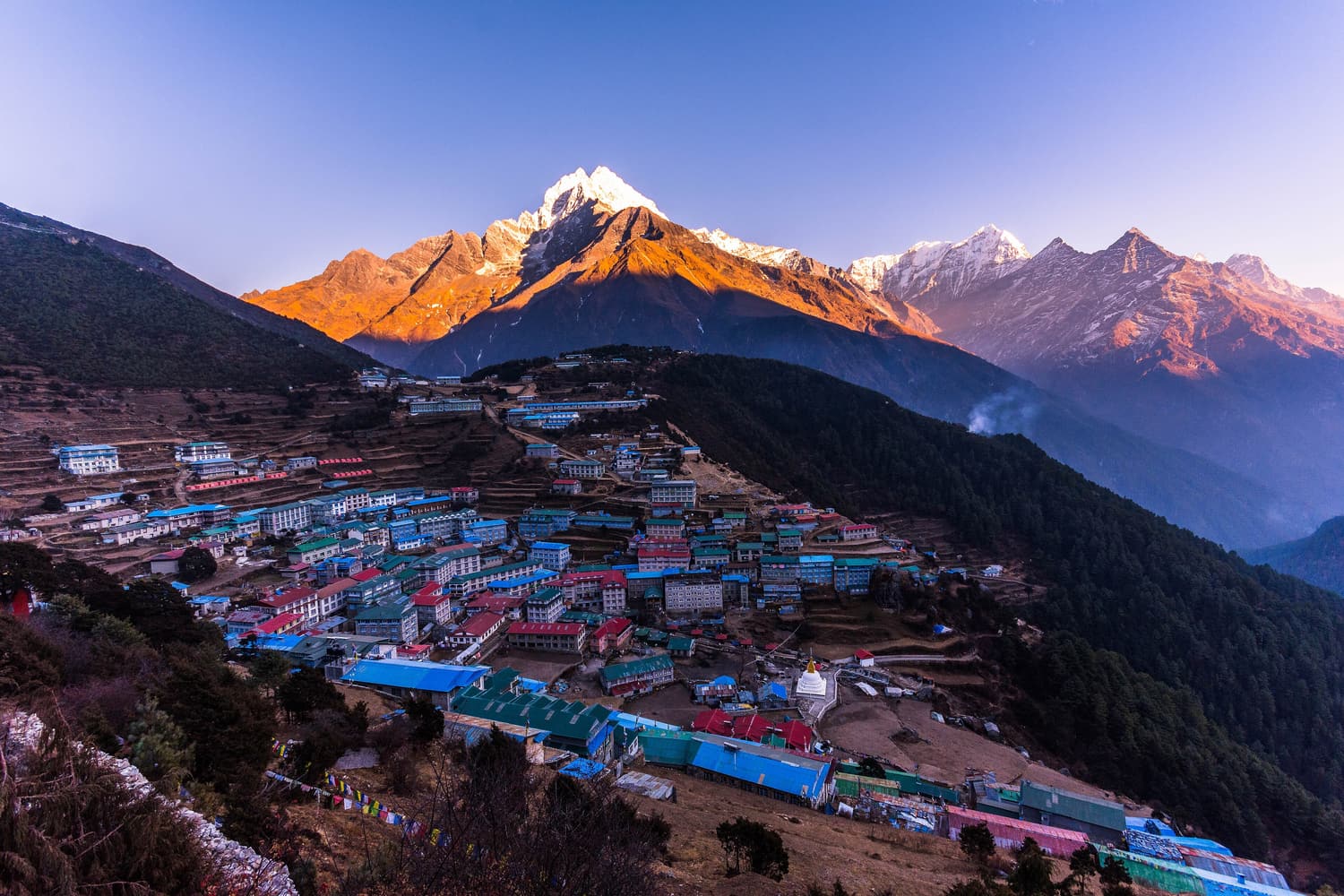
- From Namche Bazaar: five to six hours. The trail contours high above the Dudh Koshi, drops to the river at Phunki Tenga (about 3,250 m) and climbs some 600 m through forest to the saddle.
- From Pangboche: about two hours, mostly downhill then a short climb.
- Short treks: seven-to-nine-day “Everest panorama” itineraries make Tengboche their high point.
Visitor tips
- Lodges at Tengboche are few and fill quickly in peak season and during Mani Rimdu; Deboche, just below, has more beds.
- Dress modestly inside the monastery and walk clockwise around the building and its chortens.
- A donation box supports the monastery; a small contribution is appreciated.
- The climb from Phunki Tenga is hot in the afternoon — start early from Namche.
Treks & tours that include Tengboche Monastery
These guided experiences are the easiest way to reach Tengboche Monastery:
 Short guided trek from €445
 Kathmandu: 7-Day Everest Panorama Trek
A week in the lower park: Lukla to Namche Bazaar, then on to Tengboche Monastery with Everest and Ama Dablam on the skyline, and back the same way. Check exactly what the price includes — flights are often extra on budget packages.
- Namche Bazaar and the Everest View ridge
- Tengboche Monastery (3,867 m)
- One week, without going above 4,000 m
 Guided trek from €1363
 From Kathmandu: 8-Day Ama Dablam Base Camp Trek
A week-long trek through Namche Bazaar and Tengboche to Pangboche, with a day walk up to the meadow of Ama Dablam Base Camp beneath the mountain’s great west face. A fine choice when you have about a week and want more than a viewpoint.
- Base camp of the park’s most beautiful peak (about 4,600 m)
- Tengboche Monastery and Pangboche village
- Shorter and lower than the Base Camp trek
 Guided trek from €850
 From Kathmandu: 12-Day Everest Base Camp Guided Trek
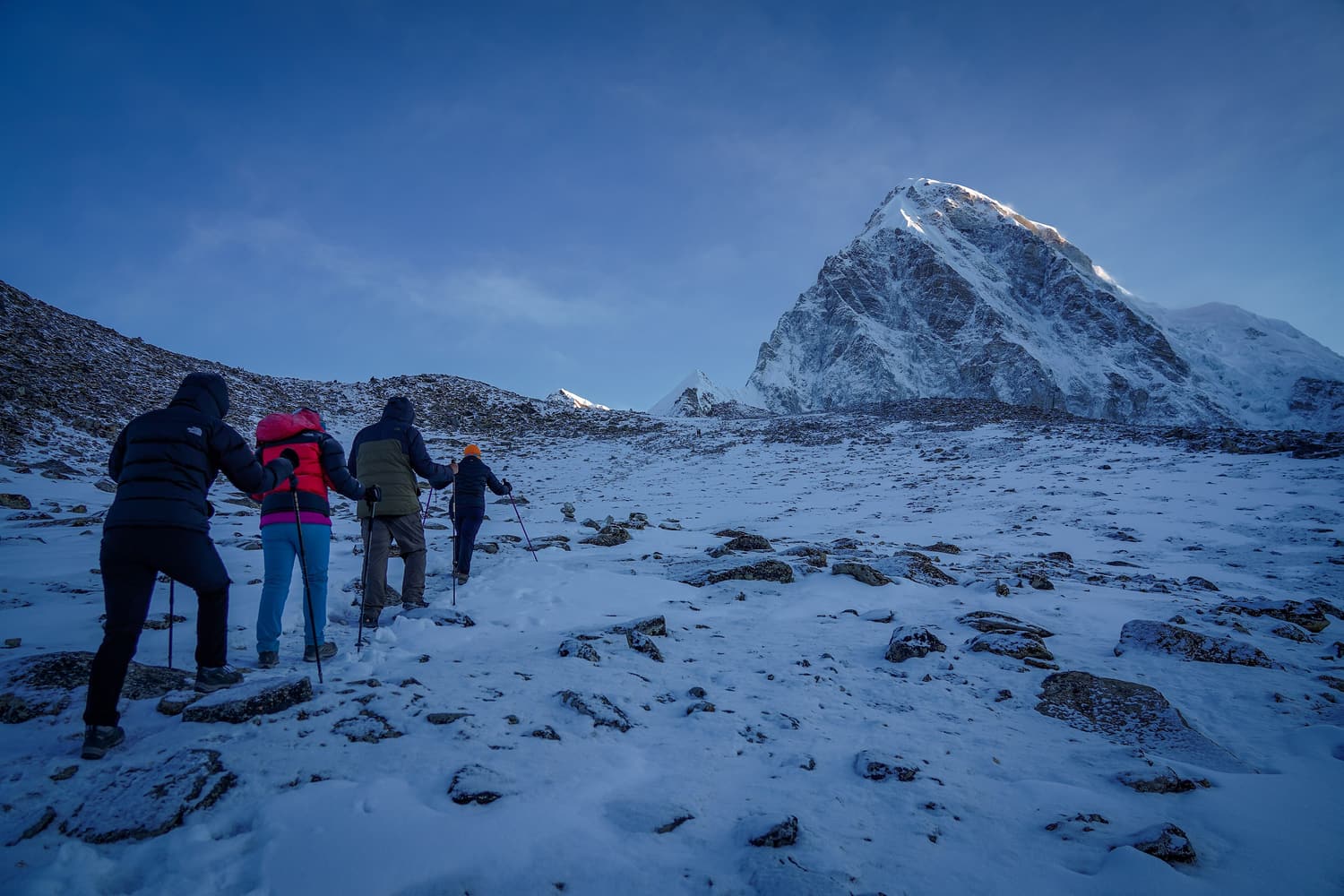
The best-known walk in the park: Lukla to Namche Bazaar, Tengboche, Dingboche and Gorak Shep, then Everest Base Camp and the sunrise viewpoint of Kala Patthar. A well-paced twelve-day programme with consistently top reviews.
- The park’s classic route with a licensed guide
- Acclimatisation days in Namche Bazaar and Dingboche
- Everest Base Camp and Kala Patthar (5,644 m)